


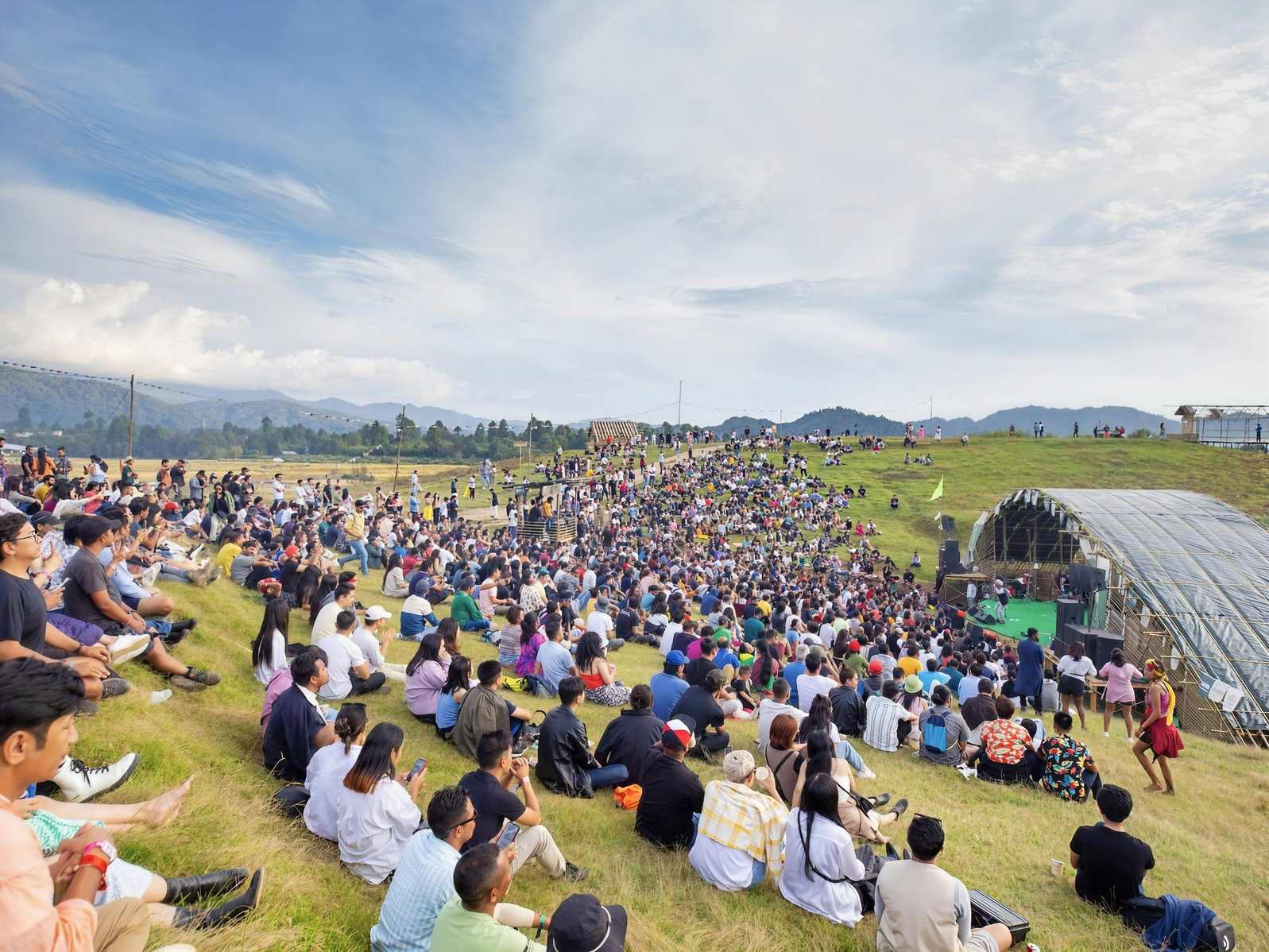
Ziro Festival 2026: How to Reach Ziro for the Festival — Flights, Trains & Road Routes from Guwahati
By the BreakBag Travel TeamThere's a particular moment on the road to Ziro that regulars wait for. Somewhere past Yupia, the highway stops climbing, the noise of the plains falls away, and the valley opens up — terraced rice fields, bamboo groves, and a bowl of hills that seems to hold the whole festival in place before you've even arrived. Getting there is half the story of Ziro Festival, and if you plan the journey well, it becomes the best part.
But here's the honest truth most travellers discover too late: Ziro has no airport and no railway station of its own. Reaching Arunachal Pradesh's biggest music festival means stitching together a flight, a train, or a long mountain drive — and almost all of it runs through one city. This guide breaks down every route from Guwahati, with real distances, real train numbers, and the practical advice you only get from doing this trip year after year.
Ziro Festival of Music 2026 runs 24–27 September 2026, across four days of indie music, Apatani culture, and bamboo stages in one of Northeast India's most beautiful valleys. Let's get you there.
How to Reach Ziro Festival: Your Complete Route Map from Guwahati
Before we go route by route, here's the shape of the whole journey so you can picture it.
Ziro Valley sits in the Lower Subansiri district of Arunachal Pradesh, roughly 1,500–1,600 metres above sea level, about 110 km from the state capital Itanagar. Ziro Valley is approximately 450–470 km from Guwahati, and it takes around 10–12 hours by road. There are no direct flights and no train line into Ziro itself, so every traveller ends up combining transport modes.
The single most reliable path looks like this: fly or train into .the Guwahati–Naharlagun corridor, then drive the final stretch to Ziro. Guwahati is the gateway because it's the one point in the Northeast connected to the rest of India by frequent flights and trains — and from there, the road to Ziro is well-travelled, scenic, and manageable in a day.
Here's the quick comparison, so you can decide before we go deeper:
|
Route from Guwahati |
Approx. distance |
Approx. time |
Best for |
|
By air (via Lilabari/Jorhat, then road) |
Varies by connection |
Fastest overall |
Travellers short on time |
|
By train (to Naharlagun, then road) |
332–360 km rail + ~100 km road |
Overnight + ~3 hrs |
Budget & scenery lovers |
|
By road (direct drive/cab) |
450–470 km |
10–12 hrs |
Backpackers, groups, road-trippers |
Every one of these funnels into the same final leg: the road into Ziro Valley. Let's start with why Guwahati anchors all of it.
Why Guwahati Is the Gateway to Ziro Valley
If you're flying in from Kolkata, Delhi, Mumbai, Bangalore, or anywhere else in India, Guwahati is almost certainly your first stop — and for good reason.
Guwahati holds the nearest international-standard airport to Ziro and the best-connected railway station in the entire Northeast. It's where flight networks and train lines from across the country converge before the terrain gets remote. Once you go beyond Guwahati toward Arunachal Pradesh, connectivity thins out fast: fewer flights, scarcer trains, and roads that demand daylight and patience.
That's why seasoned Ziro travellers treat Guwahati not as a detour but as basecamp. Land here, rest if your onward journey is overnight, stock up on anything you'll need, and then commit to the final push into the valley. Getting to Guwahati is the easy part — direct flights and trains run daily from every major Indian metro. The real planning begins the moment you decide how to cover the last stretch.
One more thing to sort before you travel, regardless of route: the Inner Line Permit (ILP). Every Indian traveller needs one to enter Arunachal Pradesh, and international visitors need a Protected Area Permit. Don't leave this to the last minute — it's the one piece of paperwork that can stop your trip at the border.
Guwahati to Ziro by Air: Nearest Airport & Flight Routes
Let's clear up the most common confusion first: Ziro does not have an airport. So "flying to Ziro" really means flying as close as you can, then driving the rest.
Your realistic air options after reaching Guwahati (or connecting through it) are the smaller regional airports closer to the valley. Lilabari Airport (North Lakhimpur) in Assam is among the nearest, at roughly 100–125 km from Ziro, followed by Jorhat and the newer Donyi Polo Airport at Hollongi (Itanagar). From any of these, you'll hire a private cab for the final mountain leg into Ziro.
There's also the option many international and time-pressed travellers use: fly into Guwahati, then take a connecting regional flight or drive onward. The nearest airport listed for Ziro is served by regional carriers, with routings that typically involve a stop rather than a direct hop.
The catch with the air route is twofold. First, these smaller airports have limited daily flights, so schedules dictate your plans rather than the other way around. Second — and this matters enormously during festival season — flights and seats fill up months ahead. If you're flying into Lilabari or Hollongi for the festival, book the moment you've locked your dates. September is peak, and last-minute fares are punishing when they're available at all.
Air is the fastest way to shrink the journey, but it's also the least flexible and the priciest. For many travellers, the train tells a better story.
Guwahati to Ziro by Train: Naharlagun Railway Route Explained
If you want the journey to feel like part of the adventure — and you'd rather spend your money on the festival than on flights — the train is the classic Ziro approach.
Here's the key fact: the nearest railway station to Ziro is Naharlagun (station code NHLN), near Itanagar. There's no train into Ziro itself, so you ride the rails to Naharlagun and drive the last stretch. The distance from Naharlagun to Ziro is about 95–100 km, and the drive takes roughly 1.5 to 4 hours depending on conditions.
The workhorse train on this corridor is the Donyi Polo Express (15817). It's an overnight service that starts from Guwahati at around 23:30 and reaches Naharlagun the next morning, taking close to seven hours. Boarding at night and waking up near the hills is exactly the kind of transition that eases you into Ziro's pace.
There's also a faster premium option: the Naharlagun–Guwahati Shatabdi Express (12087/12088). It covers 332 km with seven stops in about six hours, running as a weekly service with AC Chair Car and Vistadome coaches — those large-windowed Vistadome seats are worth requesting for the scenery alone. And for travellers coming from further afield, there's a weekly train from New Delhi to Naharlagun every Sunday.
Once you reach Naharlagun, here's the local reality to plan around: the station sits about 15 km from the main city, doesn't receive many trains through the day, and transport out can be scarce and unreliable. The practical fix is simple — arrange your onward cab in advance. If you can't find transport at Naharlagun, take a cab the short distance to Itanagar, where shared and private cabs to Ziro Valley are much easier to find.
Book the train early. Sleeper and AC seats on the Donyi Polo Express during festival week disappear fast, and the Shatabdi's weekly schedule means limited availability. This is where having transfers pre-arranged as part of a package saves you the classic Naharlagun scramble.
Guwahati to Ziro by Road: Drive Time, Cabs & Shared Taxis
For backpackers, groups, and anyone who believes the drive is the destination, the road route is the soul of the Ziro journey.
The direct road from Guwahati to Ziro runs roughly 450–470 km and takes 10–12 hours, depending on your route and road conditions. The Guwahati–Ziro road distance is around 400–460 km depending on the route, and the drive takes 7 to 10 hours when conditions are good and you're moving efficiently — but plan for the longer end, because mountain roads don't reward tight schedules.
You have a few ways to cover it:
Direct buses. There's a night bus from Guwahati to Ziro operated by the Arunachal Pradesh State Road Transport Corporation, running four days a week. The night bus generally departs around 6 pm from ISBT Guwahati. Always confirm the bus runs on your specific travel day — the four-days-a-week schedule catches people out.
Shared taxis and Sumos. The Northeast runs on shared Tata Sumos and cabs. These are available from Itanagar, Lakhimpur, and other hubs toward Ziro. They're economical and a genuinely social way to travel, though you'll trade some comfort and schedule control.
Private cab or self-drive. The most flexible option. The newer route to Ziro from Guwahati via Yupia has comparatively less traffic, and the drive rewards you with river crossings, forest stretches, and viewpoints like the Papu–Yupia valley, where a chai stop is practically tradition. If you're self-driving, be confident on mountain roads.
Two pieces of hard-won advice for the road route. Travel in daylight wherever you can — the scenery is the point, and the roads are safer by day. And check for landslides and road conditions, especially if any monsoon lingers into late September. Carry water, snacks, and motion-sickness tablets if you're prone; the winding sections are beautiful but relentless.
Whichever way you cut it, the road always delivers you to the same reward: that first sight of the valley opening up. And after 10 hours on the road, arriving to a campsite that's already set up, with transfers handled and a coordinator waiting, is the difference between starting the festival exhausted and starting it exhilarated.
"There are festivals you attend, and then there are festivals you feel forever. The road to Ziro is where that feeling begins — one bend at a time."
You May Also Connect With Us On →
Website: BreakBag Holidays |
Email: support@breakbag.com |
Facebook: BreakBag Holidays |
Instagram: @breakbagholidays |
YouTube: BreakBag Holidays |
Threads: @breakbagholidays |
LinkedIn: BreakBag Holidays |



Looking for a hassle free trip?
Connect with our experts! Get the best Itineraries and Offers!