


Nearest Camp from Ziro Music Festival Grounds: Why Distance Decides Your Festival
By the BreakBag Travel TeamNobody tells you this before you book, so let me.
It's 1:40 in the morning. The last set has just ended — the one you actually came for, the one that made the whole flight, the whole permit application, the whole nine-hour road climb feel like a bargain. Your ears are ringing in that pleasant, expensive way. The valley air has dropped to something around eight degrees. You are, in every measurable sense, completely happy.
And now you have to get back.
If your camp is a fifteen-minute walk away — pine smell, torchlight, a few strangers walking the same direction who become friends by the time you reach the gate — that ending is part of the festival. If your camp is eleven kilometres down the valley in Hapoli, waiting for a shared Sumo that may or may not come, standing at the roadside in a jacket that suddenly isn't enough, negotiating a fare at 2 AM with a driver who knows exactly how much leverage he has — that ending is a different thing entirely.
Same festival. Same lineup. Completely different memory.
This is why the nearest camp from Ziro Music Festival grounds isn't a logistical footnote. It's arguably the single most consequential decision you'll make about your Ziro Festival 2026.
The Geography Nobody Explains
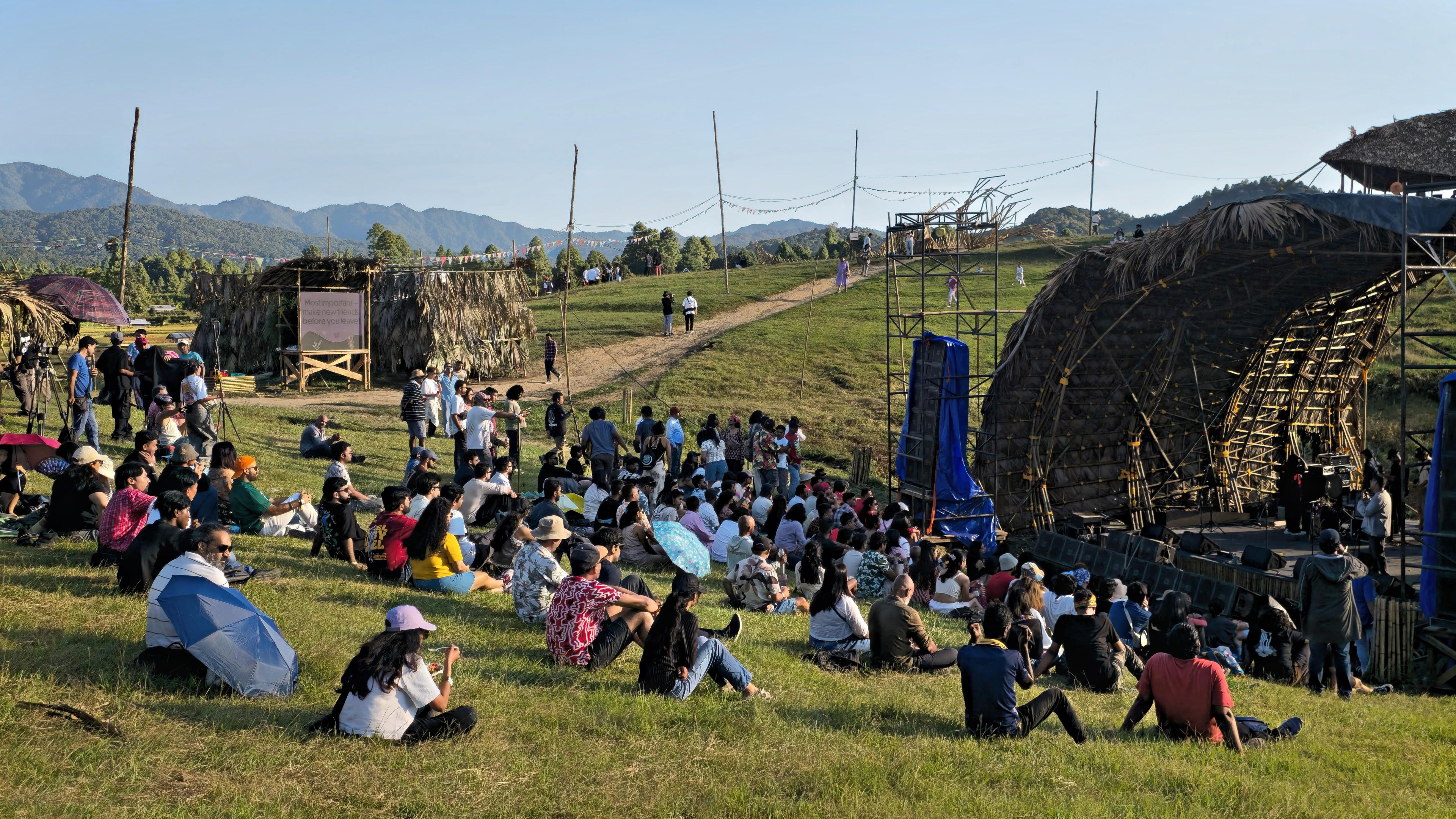
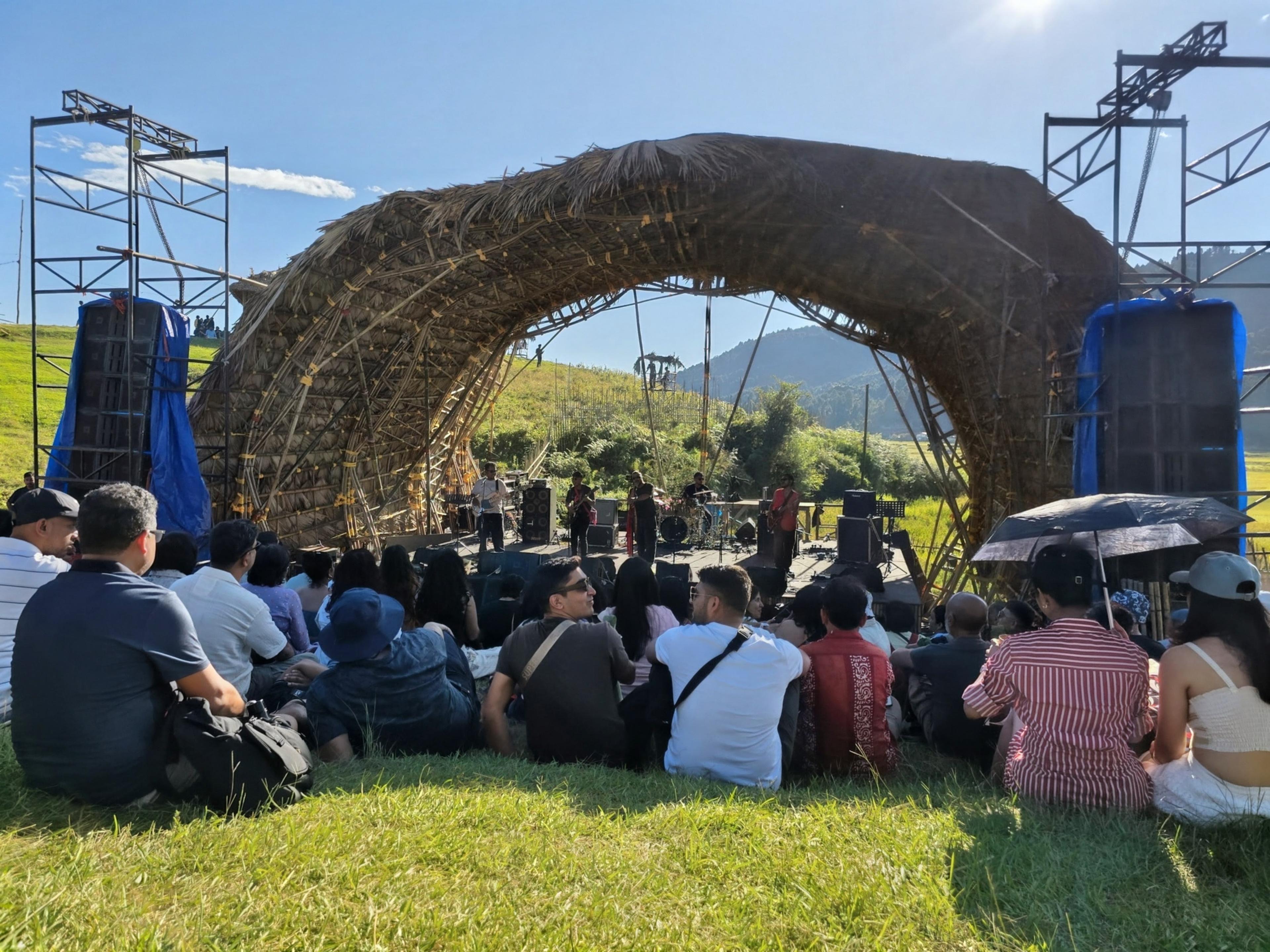
Ziro Valley is not a city with a festival in it. It's a broad, flat, terraced bowl in the mountains of Arunachal Pradesh, ringed by pine ridges, farmed by the Apatani for centuries, and — for four days each September — home to the Ziro Music Festival.
The festival grounds sit out in the open valley. Around them, in loose orbit, sit the places people sleep:
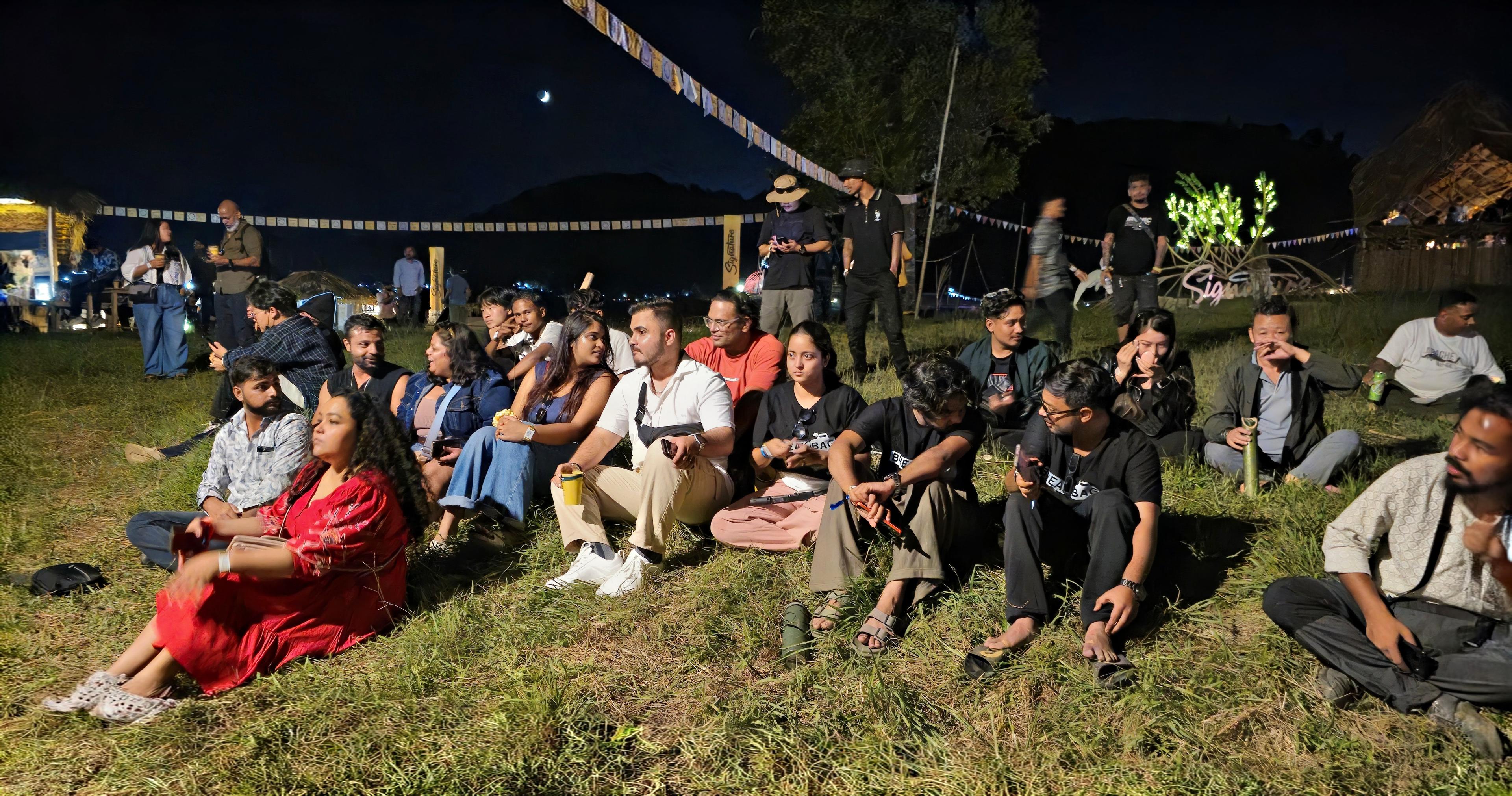
The festival-adjacent zone. Campsites pitched within genuine walking distance of the stages. This is where the camp in Ziro Festival experience actually lives — where you can hear the soundcheck from your tent and be at the main stage in the time it takes to lace your boots.
Old Ziro and the villages. Apatani settlements scattered across the valley — Hong, Hari, Bamin-Michi, Hija. Beautiful, culturally rich, and variably distant from the grounds depending on which one you land in.
Hapoli. The main town, roughly 10–11 km from the festival grounds. This is where most hotels are, most guesthouses are, and most late-booking festival-goers end up. It is also where you will spend a meaningful portion of your festival sitting in a vehicle.
The difference between the first zone and the third isn't a matter of taste. It's a matter of how many hours of your four-day festival you'd like to spend in transit.
The Real Cost of Distance: Let's Do the Arithmetic
People underestimate this because they think in single trips. Let's think in totals. Say you're staying in Hapoli, 11 km out. A one-way transfer to the grounds takes roughly 30–40 minutes in festival traffic — and festival traffic in a valley with narrow roads and a sudden influx of thousands of people is very real.
You'll want to go to the grounds and come back at least once a day. Realistically, if you also want to actually see the valley — go to the village, do the sightseeing, come back for a shower and a change — you're making that trip two or three times daily.
Four days. Two round trips a day. Thirty-five minutes each way.
That's roughly nine hours of your festival spent in a vehicle. Nine hours. That's an entire day's worth of programming, evaporated into the back seat of a shared Sumo on a mountain road. You paid for four days. You attended three and that's the optimistic version — the one where the vehicle shows up on time, every time, including at 2 AM.
What "Nearest Camp" Actually Means
Here's where the industry gets slippery, and you should know the tricks before you book.
"Near the festival grounds" — a phrase with no fixed definition, deployed liberally. Near in a valley where everything is technically within 15 km of everything else means nothing at all.
"Just a short drive from the venue" — this is the tell. If it's a drive, it isn't near. Near means you walk.
"Located in Ziro" — the entire valley is Ziro. So is Hapoli. This tells you precisely nothing.
A genuine nearest camp from Ziro Music Festival grounds passes one test, and it's a simple one: can you walk back to your tent at 2 AM without arranging transport?
If yes, it's near. If no, it isn't. Everything else is marketing.
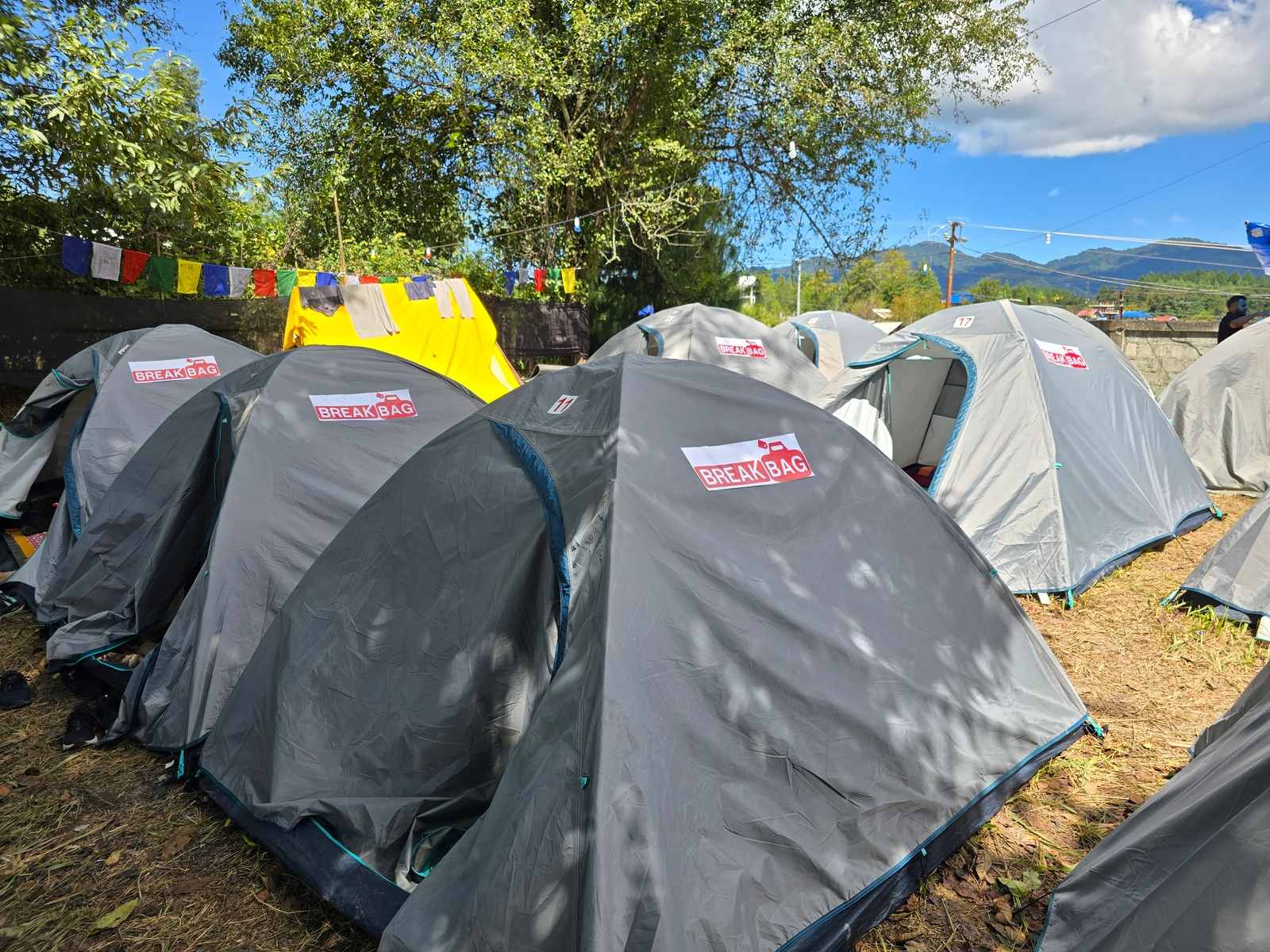
Ziro Camps by BreakBag: Built for Walking Distance
We didn't choose our campsite location by accident, and we didn't choose it for the view — though the view is, admittedly, difficult to complain about. We chose it for the walk.
Ziro Camps is positioned as one of the nearest camps from Ziro Music Festival grounds specifically so that the transit problem simply doesn't exist for our travellers. You come back when you want. You leave when you want. You go back for the encore because you can. You return to your tent for a jacket without writing off ninety minutes.
That's not a luxury feature. That's the difference between attending a festival and orbiting one.
What that proximity gives you, practically:
Freedom of movement. Forgot your torch? Walk back. Set you didn't like? Walk back, warm up, come back for the next one. The grounds become an extension of the campsite rather than a destination requiring an expedition.
No 2 AM negotiation. The single worst part of a distant stay is the end of the night — cold, tired, and dependent on a vehicle that operates on its own schedule. Delete that entirely.
More festival, less logistics. Every hour you're not travelling is an hour you're actually at the thing you paid to attend.
Camp hopping becomes possible. Ziro's real social life happens between the campsites, not just at the stages. If you're 11 km away, you're structurally excluded from it.
What You Get at Ziro Camps
- Proximity is the headline, but a tent you can walk to is only worth something if the tent is worth walking to.
- Dome tents, double-sharing basis. Four nights, managed campsite, proper setup — not a tarp and an apology.
- Daily breakfast and dinner. Hot food, at altitude, after a long day. Eight meals across the itinerary. This matters more than you'd think at 1,500 metres in late September.
- Nightly bonfire (weather permitting). Which is where roughly half the actual friendships of any Ziro festival get made.
- Trip coordinator on the ground. A person, physically present, for the entire journey.
- 24-hour support. Because mountain travel occasionally goes sideways and a chatbot cannot fix a landslide.
- Included transfers as per itinerary — station pickups, the run up to Ziro, and back down at the end.
We operate this camp directly. BreakBag isn't reselling someone else's tents through three layers of middlemen. We own Ziro Camps. That's why we can guarantee where you'll actually be sleeping a promise most aggregators genuinely cannot make, because they don't know either until you arrive.
The Booking Problem Nobody Warns You About
Here's the uncomfortable structural truth about camping in Ziro during festival week. The valley is small. The number of tents that can physically be pitched within walking distance of the grounds is finite, and it's a much smaller number than most people assume. Meanwhile, the Ziro Music Festival draws thousands.
The arithmetic resolves itself in exactly one way: the near camps fill first, and everyone else goes to Hapoli.
Not because they wanted to. Because by the time they booked, the walking-distance inventory was gone. Every year, a large number of people arrive at Ziro having paid a perfectly reasonable amount of money for a stay that quietly costs them nine hours and every late night of the festival.
They didn't make a bad decision. They made a late one. The nearest camp from Ziro Music Festival grounds is not something you can secure in September. It's something you secure now, in the boring months, when nobody's thinking about it. That's the entire game.
Nearest Camp vs. Nearest Homestay: Which Should You Pick?
Both have a case. Let's be honest about it.
| Camp (Ziro Camps) | Homestay in Ziro Valley | |
|---|---|---|
| Distance to grounds | Walking distance | Varies by village — often further |
| Late-night return | Walk back, anytime | Usually needs transport |
| Vibe | Festival immersion, camp hopping | Cultural immersion, Apatani home life |
| Comfort | Dome tent, shared, cold nights | Solid roof, warmer, quieter |
| Best for | Being in the festival | Being in the valley |
Choose the camp if the festival is the point. You want to be inside the noise, walking home at 2 AM, meeting people at the bonfire, and not thinking about vehicles once. Choose the homestay if you want to sleep warm, wake to an Apatani kitchen, and understand the valley beyond the four days of music — and you're comfortable arranging transfers for the grounds.
Most people should take the camp. That's not a sales line — it's the honest answer for anyone whose primary reason for coming is the Ziro Festival. The best homestay in Ziro Valley is a genuinely wonderful thing, and we run those too. But it is a different holiday.
Three Gateways, One Campsite
Wherever you're starting from, you end up in the same tent.
| Departure | Duration | Package Cost |
|---|---|---|
| Naharlagun / Itanagar | 4N / 5D | ₹17,500 |
| Guwahati | 5N / 6D | ₹17,999 |
| Dibrugarh | 4N / 5D | ₹23,500 |
The Guwahati package is the one most people should be looking at — ₹499 more than Naharlagun, and it includes an extra night and the entire train journey from Guwahati to Naharlagun. Best airport connectivity, best arithmetic. All three land you at the same campsite, within walking distance of the same stages.
What Your Four Days Actually Look Like
Because proximity changes the shape of the whole itinerary.
Day 1 — Arrive, transfer up to Ziro, check into your dome tent. Walk to the grounds that same evening. First night, bonfire, the valley introduces itself.
Day 2 — Apatani village experience with a local guide — the architecture, the sustainable farming system, the tattoo traditions. Rice wine tasting. Back to the grounds by evening, on foot.
Day 3 — Paddy field fishing, the Apatani rice-fish system you've probably never seen anywhere else on earth. Afternoon camp hopping — which only works when you're actually in the camping zone. Evening: music.
Day 4 — Festival finale. Optional valley sightseeing (₹500 per person) — Seeh Lake, Siikhe Lake, Pamu Yalang, Shree Siddheshwar Nath Shiva Linga. Closing acts. Last bonfire.
Day 5 — Breakfast, check out, transfer down.
Notice what's absent from that list: any mention of waiting for a vehicle. That's the whole point.
The One-Line Version
If you take one thing from this page: at Ziro, the distance between your tent and the stage is the difference between attending a festival and commuting to one.
The lineup is the same for everyone. The valley is the same for everyone. What separates a good Ziro from an unforgettable one is whether, at 2 AM, you get to walk home under the pines with the set still ringing in your ears — or stand at a roadside in the cold, waiting.
Book the near camp. Book it early. The rest takes care of itself.
"The best distance between you and the music is a short walk under the pines."
Looking for a hassle free trip?
Connect with our experts! Get the best Itineraries and Offers!