


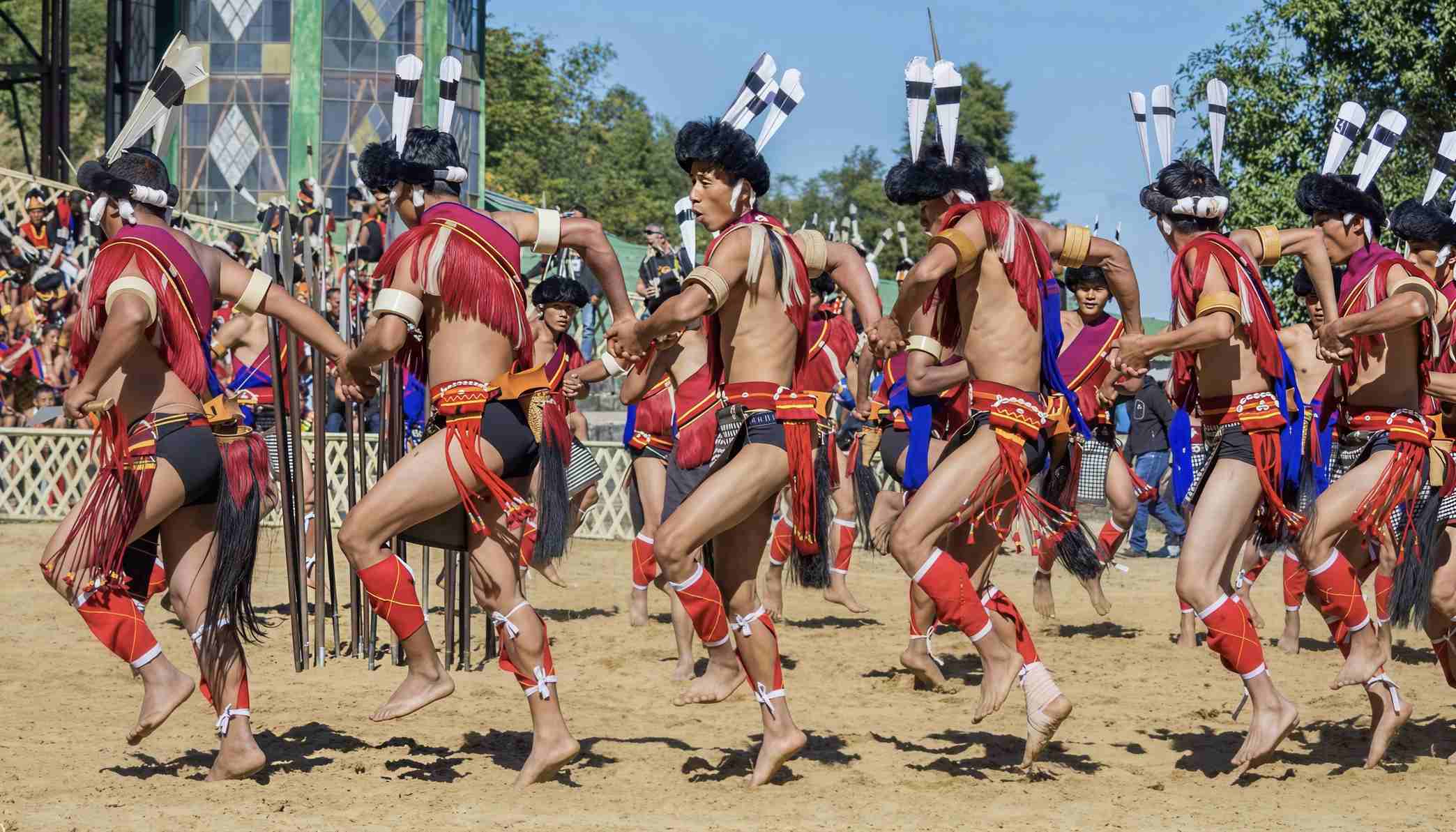
Hornbill Festival vs Other Indian Festivals: Why It's Unique
By the BreakBag Travel TeamIndia doesn't do festivals quietly.
We throw colour at each other until the streets run pink and orange. We light a million lamps and set the night sky on fire. We pull chariots the size of buildings through crowds that stretch past the horizon. If there's one thing this country knows how to do, it's celebrate — loudly, joyfully, and on a scale that leaves the rest of the world blinking.
So here's a fair question. In a land already overflowing with Holi, Diwali, Durga Puja, Pushkar, and a hundred others, what makes the Hornbill Festival so special that people fly across the country — and across the world — to a remote corner of Nagaland just to witness it?
The answer is that the Hornbill Festival isn't like the others. Not better, not bigger — different, in a way that's worth understanding before you go.
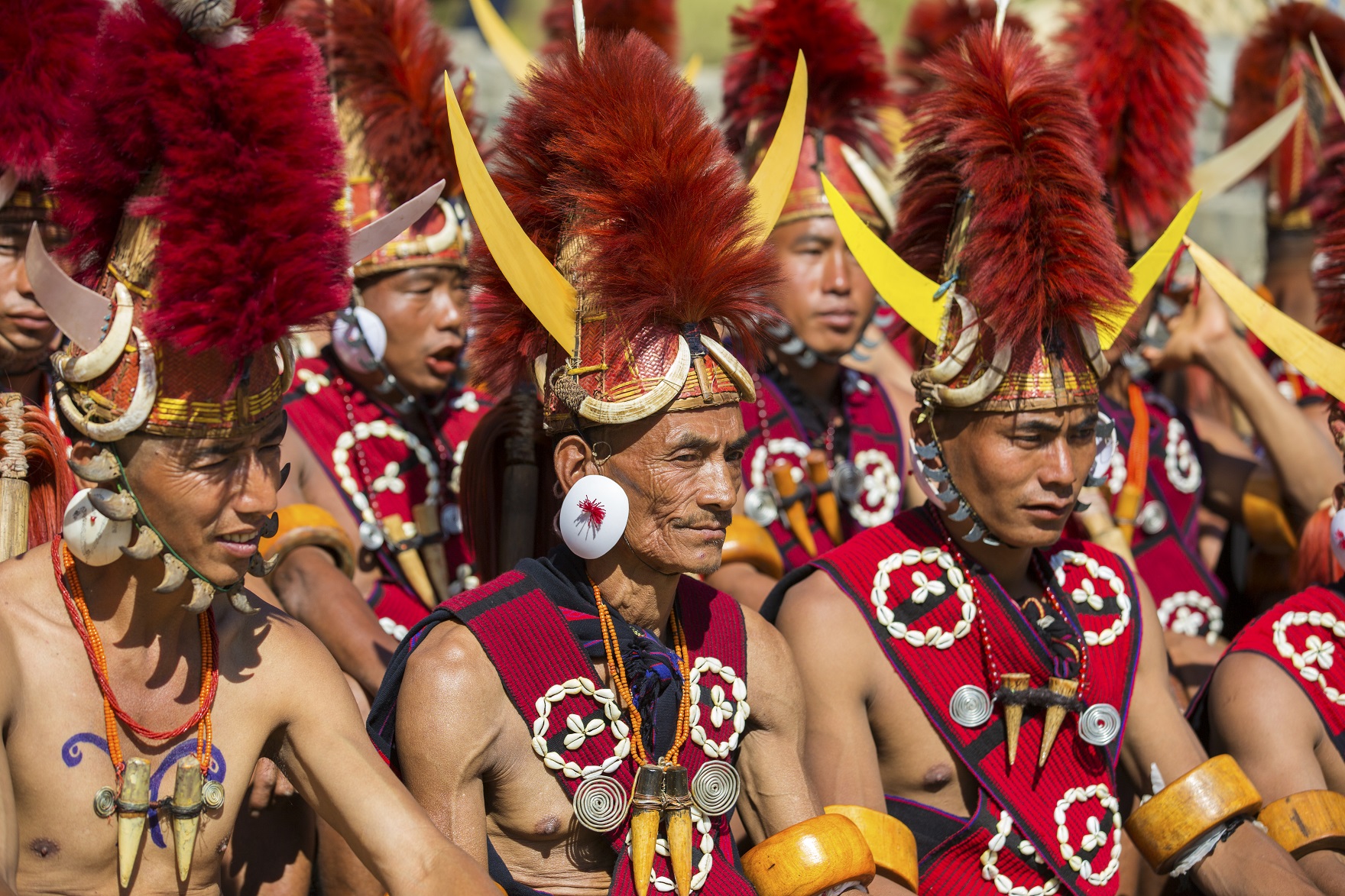
Looking to experience the real tribal culture of Nagaland? Explore our Hornbill Festival 2026 tour packages, featuring immersive travel, authentic village stays, and meaningful tribal interactions—while joining like-minded travellers on our fixed group departures led by expert trip leaders.
It's a Festival of Festivals, Not a Single Celebration
Most Indian festivals celebrate one thing. Holi is the arrival of spring and the triumph of colour. Diwali is light over darkness. Durga Puja honours the goddess. Each has its story, its ritual, its single beating heart.
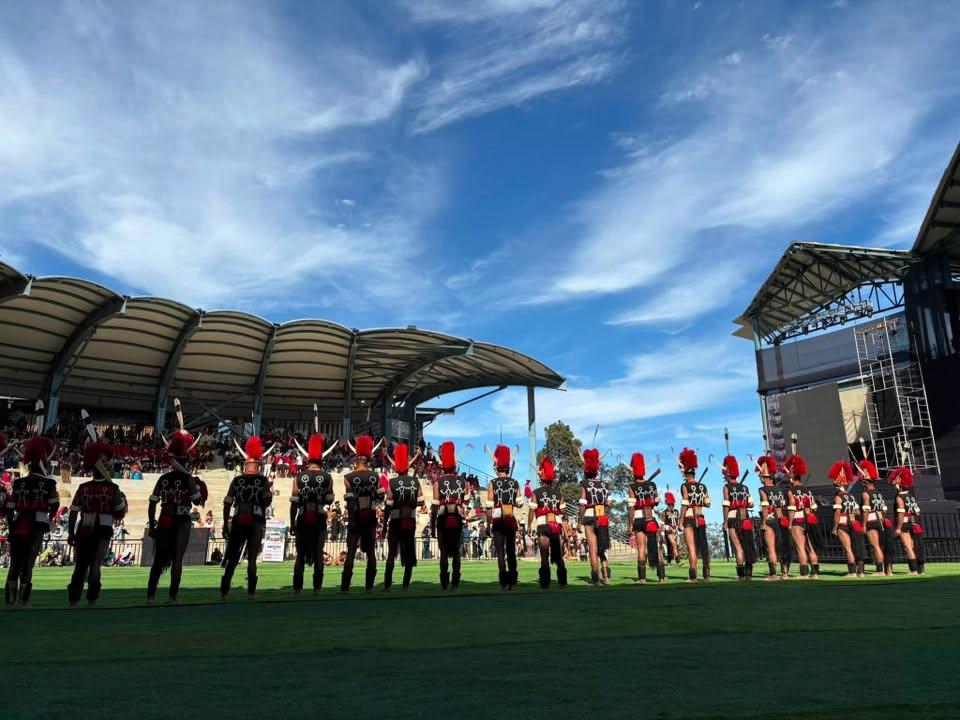
The Hornbill Festival is different — it's a festival of festivals. That nickname isn't marketing; it's literally what it is. Every December at the Naga Heritage Village in Kisama, near Kohima, all of Nagaland's major Naga tribes gather in one place to share their own individual celebrations at once. The Angami, the Ao, the Konyak, the Sumi, the Lotha and the rest each bring their own dances, songs, food, and traditions to a single ground.
So while Holi is one celebration shared by millions, the Hornbill Festival is dozens of distinct tribal cultures, side by side, in one place, for ten days. You're not attending a festival. You're attending all of them at once.
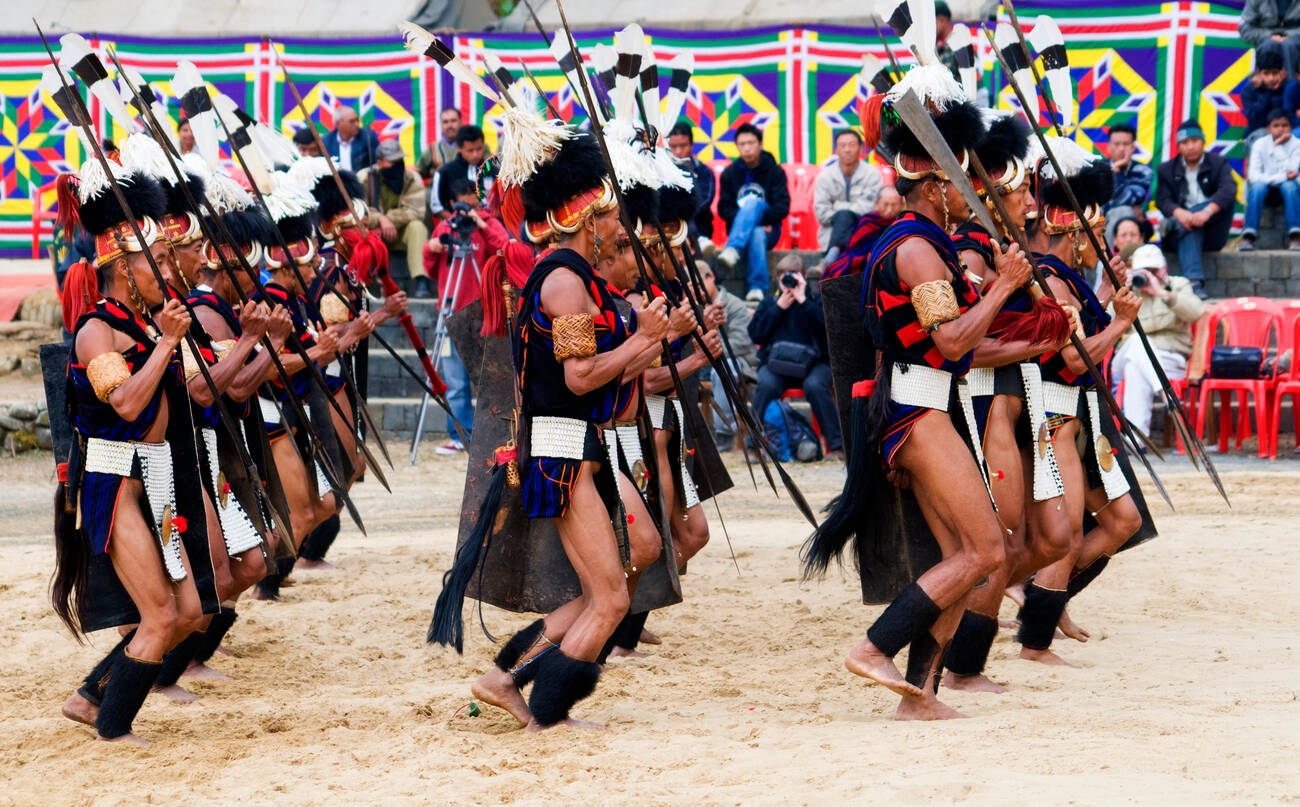
The Hornbill Festival is officially organized by the Government of Nagaland as a flagship cultural initiative to preserve and promote the rich tribal heritage of the state. For official updates and event details, travellers can refer to the state’s tourism platform.
It's Cultural, Not Religious
Here's something that surprises a lot of first-time visitors. Most of India's headline festivals are rooted in religion and mythology — the gods, the epics, the sacred calendar. They're beautiful, but they ask you to understand a story you may not share.
The Hornbill Festival isn't like that. It's a celebration of culture and heritage rather than religion. It was created by the Government of Nagaland in the year 2000 with a very human goal: to bring the tribes together, to keep their fading traditions alive, and to let the world see a way of life that had stayed hidden in these hills for centuries.
That changes how it feels to be there. You don't need to know the mythology to be moved by a war dance. You don't need to share a faith to taste smoked pork in a tribal morung or feel the log drums in your chest. The Hornbill Festival welcomes you simply as a guest — and that openness is rare.
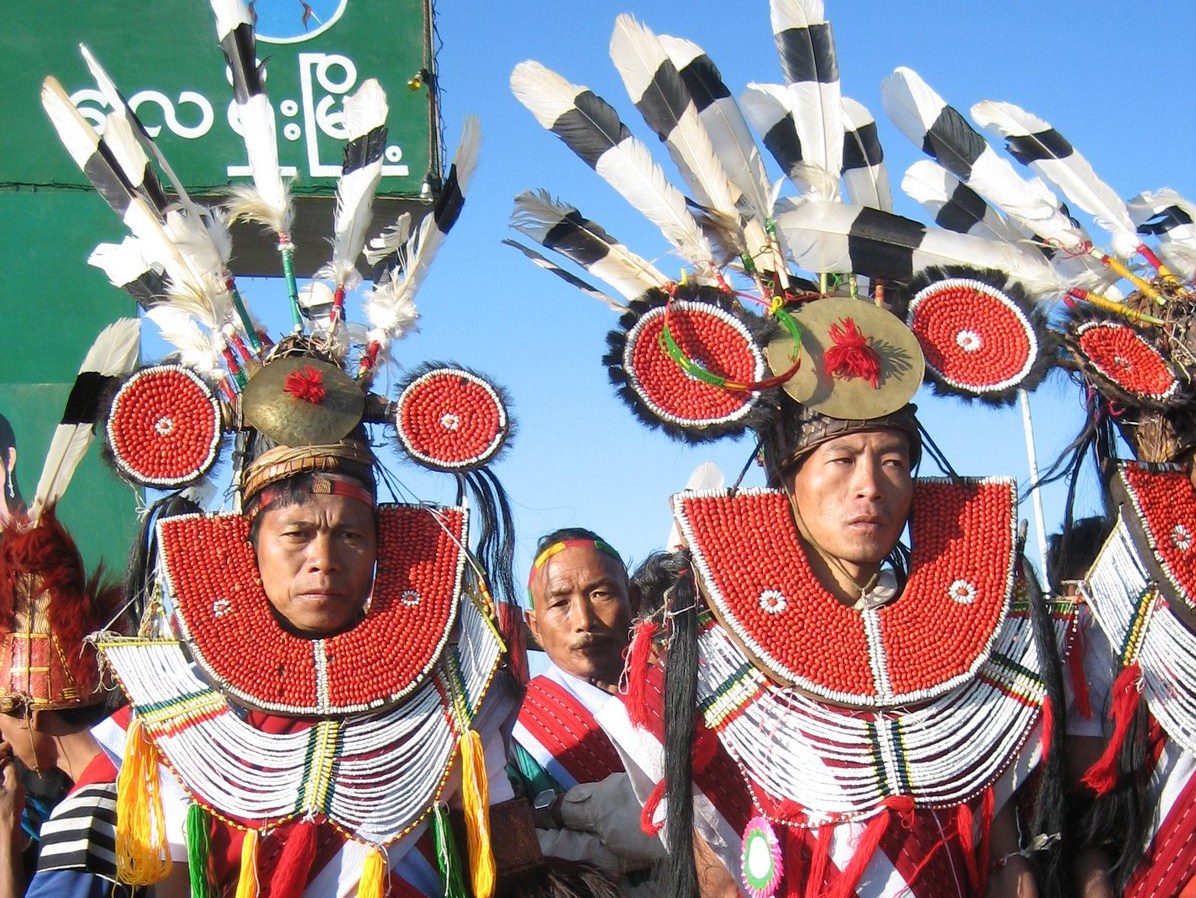
Planning your trip properly is essential—read our complete Nagaland travel guide for Hornbill Festival 2026 covering permits, routes, and insider tips.
The Setting Is Unlike Anywhere Else
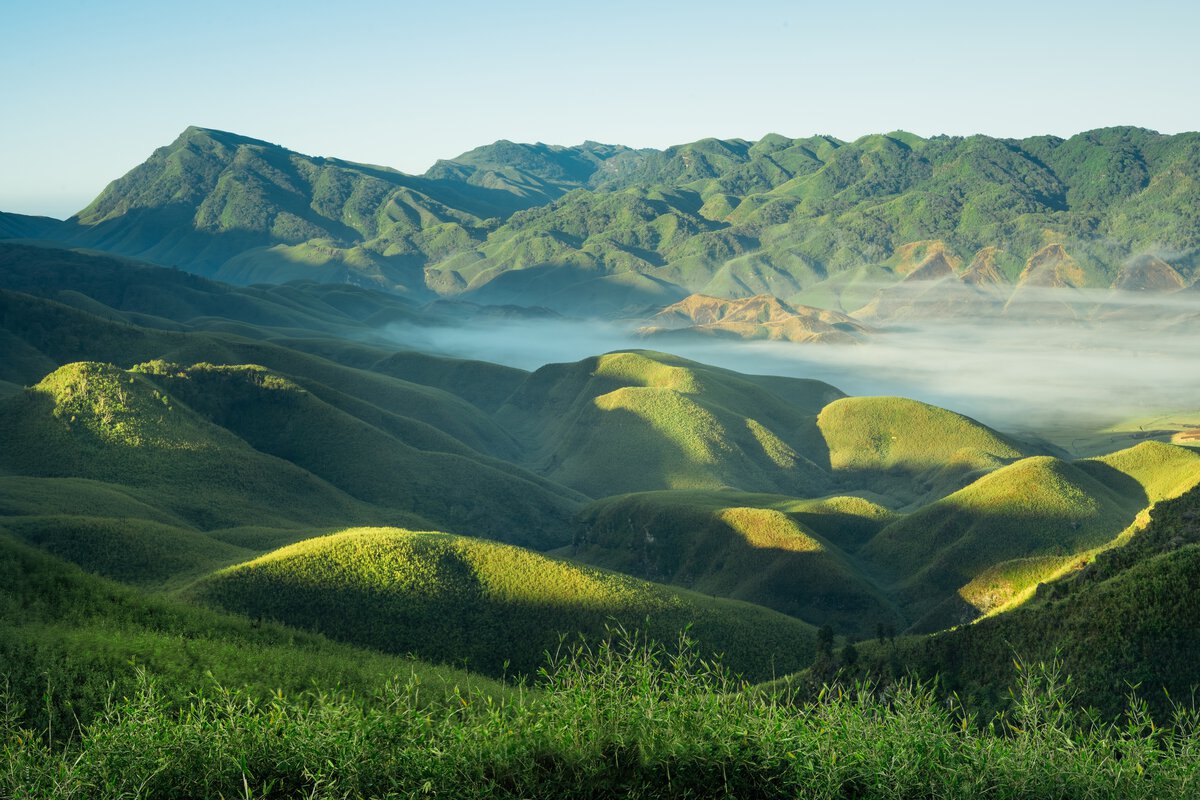
Picture the backdrop of India's most famous festivals. Holi in the lanes of Mathura. Diwali across the rooftops of a glowing city. Pushkar's camels against the Rajasthan desert. Each is unforgettable in its own right.
Now picture this instead: misty green hills, cool December air, terraced fields falling away into the valleys, and a purpose-built heritage village where each tribe has its own carved wooden morung decorated with weapons, textiles, and food. The Hornbill Festival unfolds in the Naga hills, about 12 kilometres south of Kohima, in a landscape most Indians have never seen and many have never even considered.
There's no heat, no dust, no jostling city crowd. There's woodsmoke in the air, warriors in feathered headgear, and hills that seem to go on forever. The setting alone makes it feel like you've travelled not just to another state, but to another world.
It's Authentic, Not Performed for Tourists
This is the part that stays with people.
Plenty of cultural shows around the world are staged — polished performances designed for a camera and an audience. The Hornbill Festival isn't that. The dances you'll see are the real traditions of the Naga tribes, performed by the communities they belong to, rooted in generations of meaning. The war dances were once danced by actual warriors. The songs predate anything written down. The food is cooked the way it's cooked at home.
Yes, tourists come — thousands of them. But the festival never stops belonging to the Naga people. You're not watching a show put on for you. You're being allowed into something that was already theirs. And there's a world of difference between the two.
You Can Reach Out and Touch the Culture
At many large festivals, you're one face in an ocean — swept along, watching from a distance, part of a crowd too big to feel personal.
The Hornbill Festival is intimate in a way that scale can't offer. You can walk from one tribe's morung to the next, taste their rice beer, watch their folk wrestling, ask about a shawl and hear the story of what its colours mean. You can sit with the food, linger over the crafts, and actually talk to the people whose culture you're experiencing. It's a festival you move through slowly, not one that rushes past you.
That's why so many travellers describe Hornbill not as an event they attended, but as a place they were welcomed into.
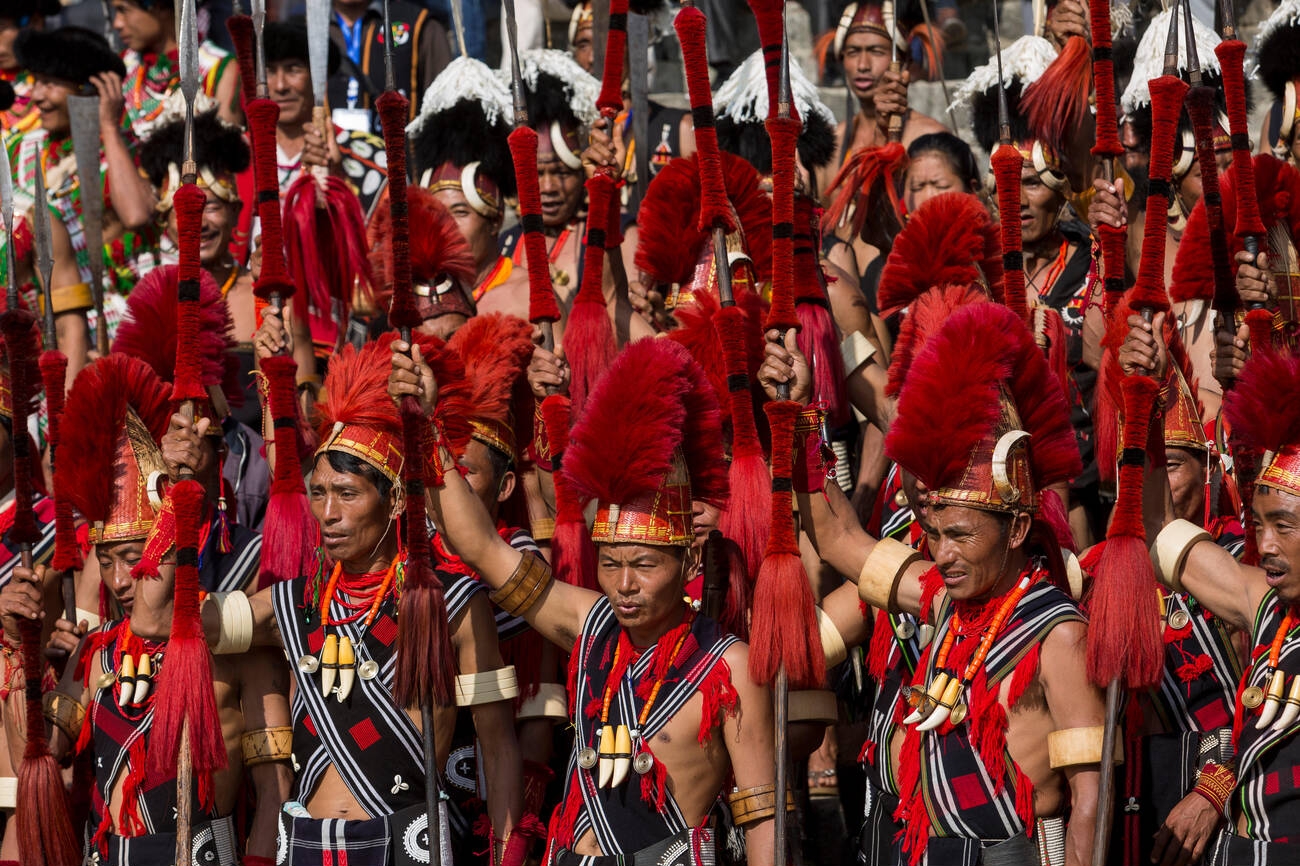
Nagaland is home to more than 16 indigenous tribes, each with distinct traditions, attire, and languages, all of which are showcased during the Hornbill Festival.
So, Why Is the Hornbill Festival Unique?
Put it all together and the picture is clear. Where most Indian festivals are single celebrations, the Hornbill Festival gathers dozens. Where they're rooted in religion, it celebrates living culture. Where they fill cities, it unfolds in misty hills. Where some perform for tourists, it stays genuinely, proudly authentic. And where the biggest festivals can swallow you in a crowd, this one lets you step close enough to touch.
It's not a rival to Holi or Diwali — it's something else entirely. A window into a part of India that most people never see, kept alive by the very communities it belongs to.
Experience the Difference for Yourself
Reading about the Hornbill Festival will only take you so far. The log drums, the woodsmoke, the moment a war dance begins and the whole ground seems to move — those you have to feel in person.
That's where BreakBag Holidays comes in. Our Hornbill Festival packages don't just drop you at the gates — they root you in a traditional Kigwema village homestay, take you into Khonoma and Kohima, and put you right inside the festival for its most unforgettable moments, with every permit, stay, and transfer handled for you. All you have to do is arrive.
In Nagaland, you don't just watch a culture — you're welcomed into it. Come for the festival. Stay for the people.
You May Also Connect With Us On →
Whatsaap: BreakBag’s Whatsaap |
Website: BreakBag Holidays |
Email: support@breakbag.com |
Facebook: BreakBag Holidays Facebook |
Instagram: @breakbagholidays |
YouTube: BreakBag Holidays YouTube |
Threads: @breakbagholidays on Threads |
LinkedIn: BreakBag Holidays LinkedIn |
Similar Destination
Hornbill Festival Tour Package 2026 with Dzukou Valley Trek
3N Kigwema · 1N Dzukou Valley · 1N Kigwema
Looking for a hassle free trip?
Connect with our experts! Get the best Itineraries and Offers!