


History of Hornbill Festival: Why It's Called the "Festival of Festivals"
By the BreakBag Travel TeamAsk anyone in Kohima about the first Hornbill Festival and you'll often get a smile before the story. Back in December 2000 there was no heritage village, no international rock contest and no planeloads of tourists. There was a local ground in the middle of town, a handful of tribal troupes, an antique log drum and a government that was betting that Nagaland's many tribes could celebrate together on a single stage.
That bet paid off. Today the festival draws well over a lakh of visitors every December, hosts partner nations from around the world and has become the event most travellers think of first when they picture Nagaland. But the history of Hornbill Festival is more than a tourism success story. It's a story about identity, unity and a state choosing to introduce itself to the world on its own terms.
This guide covers how the festival began, how it grew from five days to ten, why it's named after a bird, why people call it the "Festival of Festivals", and what it means to the Naga tribes today. The 27th edition runs from 1 to 10 December 2026, and if you're planning to see it in person, our Hornbill Festival 2026 tour packages cover the trip from start to finish.
What Is the Hornbill Festival and When Did It Start?
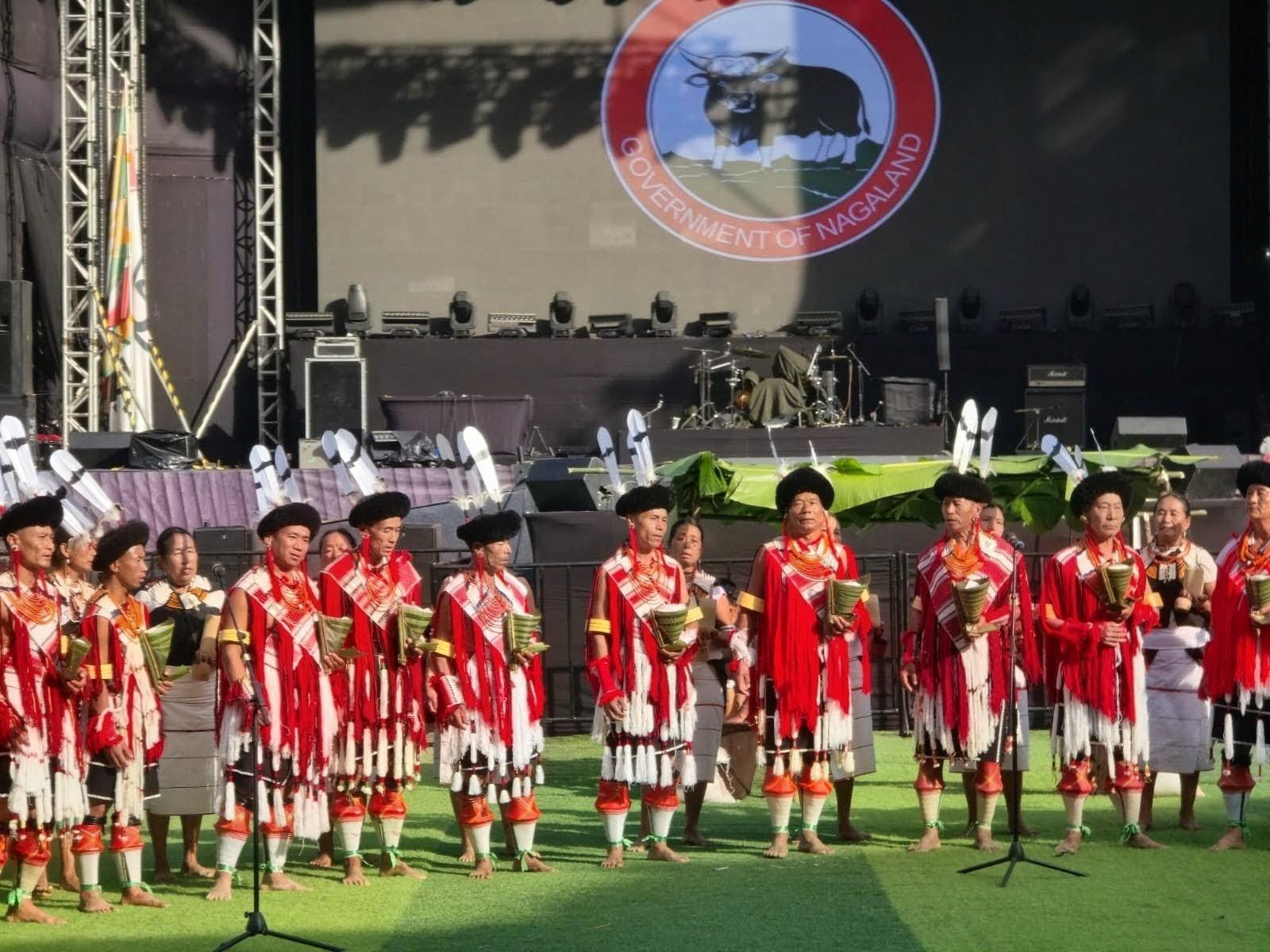
The Hornbill Festival is a ten-day cultural festival organised every year by the Government of Nagaland, through its Department of Tourism and Department of Art & Culture. It brings together every recognised tribe of Nagaland in one place to showcase their dances, songs, food, crafts, games and traditional architecture.
The first Hornbill Festival was held in December 2000 under the then Chief Minister, Dr S.C. Jamir. At the inaugural function, the purpose was described as creating a common, unified celebration of the cultural and traditional heritage of all the tribes of Nagaland. It was a simple idea, but in a state where each tribe had always celebrated its own festivals separately, it was also quite radical.
The festival is deliberately timed to open on 1 December, Nagaland's Statehood Day. Nagaland became the 16th state of India on 1 December 1963, so each Hornbill opening is also a birthday celebration for the state. This is why the dates never move, and why the opening ceremony carries so much weight for local people. If you want to be there for that moment, our Hornbill Festival opening day package is built around 1 December.
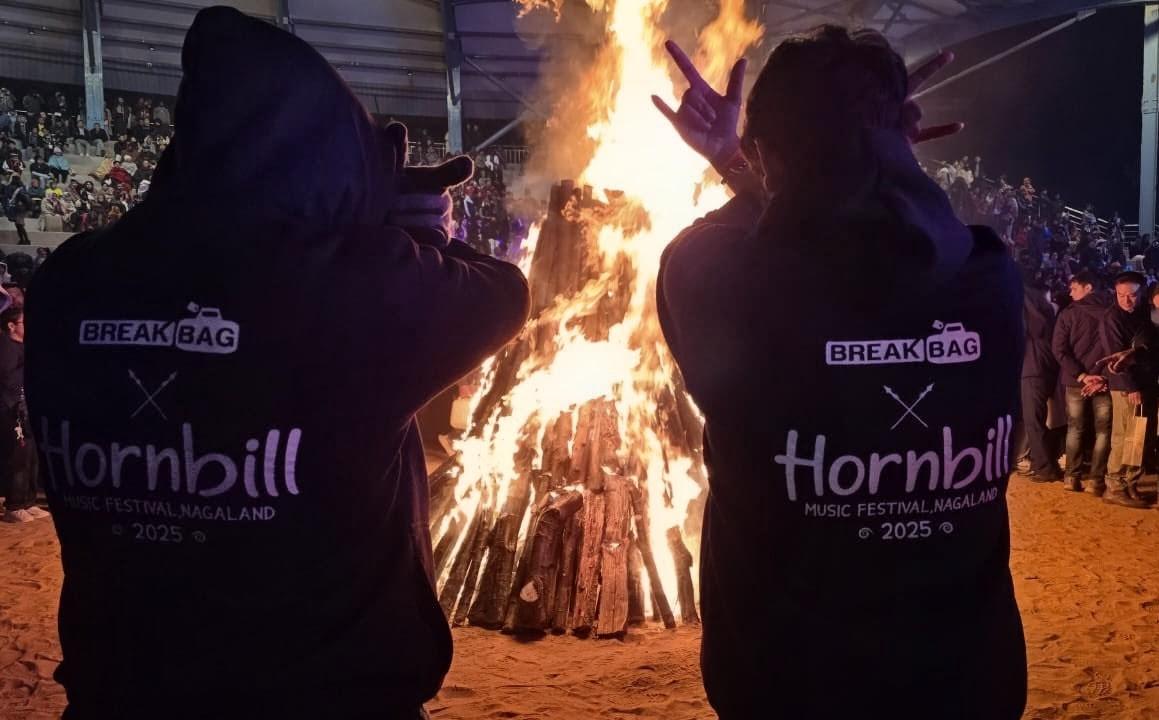
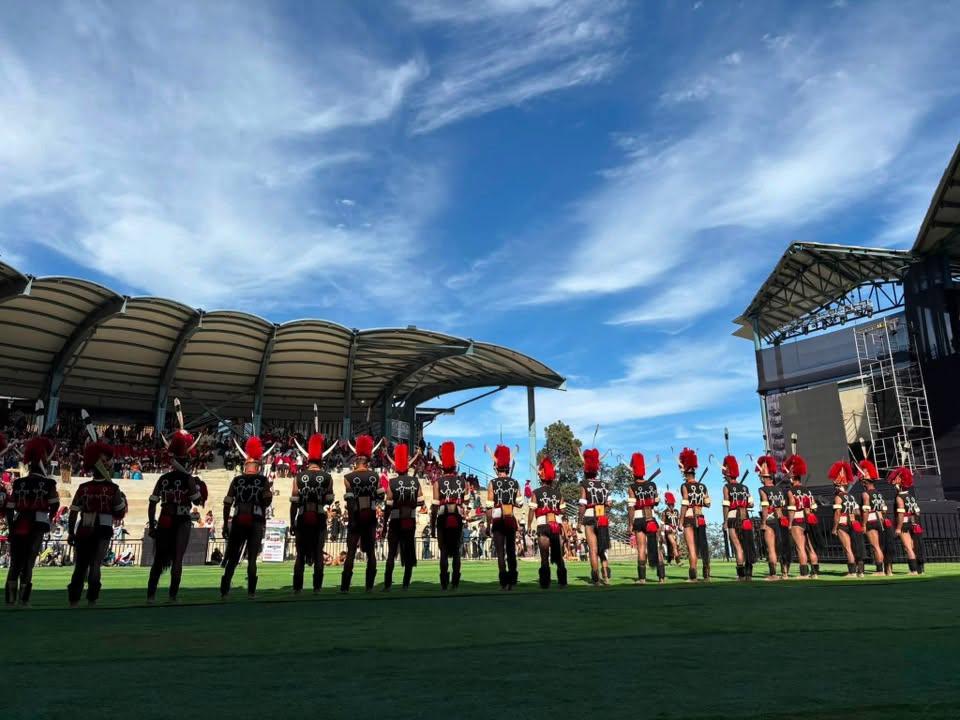
Today the festival is held at the Naga Heritage Village in Kisama, about 12 km from Kohima. According to Nagaland Tourism, its programme now goes far beyond tribal performances. It includes handicrafts, indigenous games, a food festival, village walks, a World War II rally, Naga wrestling, the famous Naga King Chilli eating contest, mountain biking, Dzükou Valley day hikes, and a music festival with rock contests and concerts.
History of Hornbill Festival: From 2000 to the 27th Edition
The festival you see today took more than two decades to build. Here's how it grew.
2000–2002: the Kohima Local Ground years. The first three editions were held at Khouchiezie, the local ground in the heart of Kohima. The first edition lasted only five days. Visitors mostly came from within Nagaland and nearby states, and the focus was on bringing the tribes together rather than on tourism numbers.
2003: the move to Kisama. In 2003, under the leadership of then Chief Minister Neiphiu Rio, the festival moved to a new permanent home at Kisama. The site was dense jungle at the time, and work to clear and develop it began only in mid-October 2003, just weeks before the festival. The name Kisama itself is a blend of the two neighbouring villages, Kigwema ("Ki") and Phesama ("Sama"), as Morung Express has documented. The land was first meant for a World War II museum, but it was large enough to host a permanent festival venue too. Tribes built their own morungs there, and some brought their log drums from their home districts after traditional log-pulling ceremonies.
Growing from five days to ten. As the crowds grew, so did the festival. It expanded from five days to seven, and then to the full ten days, 1 to 10 December, that it runs today. Over time the organisers added the evening music festival, adventure activities, night carnivals in Kohima, food contests and international cultural exchanges.
2019: the pre-pandemic peak. By 2019 the festival had become a major draw on the national tourism calendar. Nagaland's tourism department reported more than 2.8 lakh visitors that year, including over 55,000 domestic tourists and more than 3,000 foreign tourists.
2020–2021: the pandemic years. In 2020, for the first time since 2000, the festival went fully virtual because of Covid-19. Performances were broadcast on Doordarshan and private TV channels, and people in Nagaland celebrated at home. The pandemic disrupted the following edition too, and Hornbill came back in full form in 2022.
2023: a new tribe joins. The 24th edition was special for the Tikhir community, the state's newest recognised tribe, who performed at Hornbill for the first time. You can read more about them in our guide to the tribes of Nagaland at Hornbill Festival. An official economic assessment of the 2023 edition recorded around 1.54 lakh visitors and estimated that the festival generated about ₹131 crore for the local economy.
2024: the silver jubilee. The 25th edition in 2024 marked a quarter century of Hornbill, celebrated at Kisama with national and international guests. Morung Express's 25-year retrospective has photographs from that very first festival at the Kohima Local Ground.
2025–2026: going global. Recent editions have welcomed partner countries and partner states, and festival activities have spread to other districts such as Mon, Dimapur and Wokha. The 27th edition, from 1 to 10 December 2026, continues that growth.
Why Is Hornbill Festival Celebrated? The Story Behind the Name
The Hornbill Festival is celebrated for three connected reasons. The first is to preserve and revive Naga traditions at a time when modern life, migration to cities and changing lifestyles were putting old songs, dances and crafts at risk of being forgotten. The second is to build unity between tribes that speak different languages and have often lived separately. The third is to promote Nagaland as a destination, so that the outside world sees the state through its culture and hospitality rather than through old headlines.
The name comes from the hornbill, a large, striking bird found in Nagaland's forests. It shows up in the folklore of almost every Naga tribe, where it's admired for its grace, its strength and its lifelong bond with its mate. Hornbill feathers traditionally decorated the headgear of warriors and respected men as a mark of bravery and status, and hornbill motifs are carved into the posts of morungs and woven into shawls.
Choosing the hornbill as the festival's symbol made sense because it's something every tribe recognises and respects. Naming the event after a single tribe's festival would have put one community above the others. The hornbill belongs to all of them, so it became the shared emblem of a shared celebration.
There's also a quieter conservation story here. Hornbills have long been hunted for their feathers and meat, and their numbers in parts of the Northeast have fallen. By putting the bird at the centre of Nagaland's biggest event, the festival keeps it in the public eye as something to be proud of and protected, not just admired.
Why Hornbill Is Called the "Festival of Festivals"
Nagaland is often described as the "land of festivals" because each tribe has its own calendar of celebrations tied to farming, harvest and purification. The Angami celebrate Sekrenyi, the Ao celebrate Moatsu, the Konyak celebrate Aoling, the Sumi celebrate Tuluni and Ahuna, and the Lotha celebrate Tokhu Emong. Almost every month of the year has a festival somewhere in the state.
Traditionally, you'd have needed to travel to a different district at a different time of year to see each one. The Hornbill Festival changed that. For ten days in December, it brings all these traditions onto one ground at Kisama, with every tribe's dances, songs, rituals, food and crafts on display side by side. That's why people call it the "Festival of Festivals". It isn't one more festival in the calendar. It's a gathering of all of them.
The name also reflects the festival's scale. Beyond the tribal performances, Hornbill now hosts concerts, sports, adventure activities, food contests, craft bazaars and cultural exchanges with other states and countries. You can spend a morning watching a Konyak warrior dance, an afternoon tasting smoked pork and axone at the morungs, and an evening at a rock concert under the hills. Very few festivals anywhere put that much under one roof.
Hornbill's success has also inspired others. Several states in the Northeast now run their own large multi-tribe cultural festivals, but Hornbill remains the original model and the best known of them.
Hornbill Festival Significance for Naga Tribes Today
For visitors, Hornbill is a once-in-a-lifetime spectacle. For the Naga people, its significance runs much deeper.
A living archive. Many young Nagas grow up in towns, study outside the state and speak English and Nagamese more than their tribal languages. Hornbill gives them a reason to learn the songs, practise the dances, wear the shawls and help build their tribe's morung. For many troupes, the weeks of rehearsal before December are as important as the performance itself.
Pride and identity. For a long time, outsiders knew Nagaland mainly through stories of conflict. Hornbill lets Nagas tell their own story to the world, through their art, hospitality and food. That's why the opening on Statehood Day feels so emotional for many local families.
Unity between tribes. The festival puts tribes that once lived very separate lives side by side for ten days. They share a stage, visit each other's morungs and celebrate together, which is exactly what the founders hoped for in 2000.
Livelihoods. The economic impact matters too. Homestays, taxi drivers, weavers, food vendors, guides and craftspeople across Kohima and the surrounding villages earn a significant part of their yearly income in December. When you buy a shawl at Kisama or stay in a village homestay, you're supporting that directly.
An evolving tradition. Hornbill isn't frozen in time. New tribes have joined, new events are added each year, and debates continue about how to balance tourism with authenticity. That ongoing conversation is part of what keeps the festival alive and meaningful.
If you're planning a visit, remember that Indian citizens need an Inner Line Permit to enter Nagaland. Our step-by-step guide on the Nagaland ILP for Hornbill Festival explains how to apply online. For everything else, from dates to accommodation, see our complete Hornbill Festival guide.
"Hornbill began as a gathering on a town ground. It grew into a place where a whole state comes home to itself every December."
Ready to be part of the story? BreakBag's Hornbill Festival 2026 tour packages include festival days at Kisama, comfortable stays, Dimapur transfers and local guides who can share the history behind what you're seeing. If you want to be there for the Statehood Day opening, see our opening day package or WhatsApp our team. December seats are filling fast
Similar Destination
Hornbill Festival Tour Package 2026 with Dzukou Valley Trek
3N Kigwema · 1N Dzukou Valley · 1N Kigwema
Looking for a hassle free trip?
Connect with our experts! Get the best Itineraries and Offers!