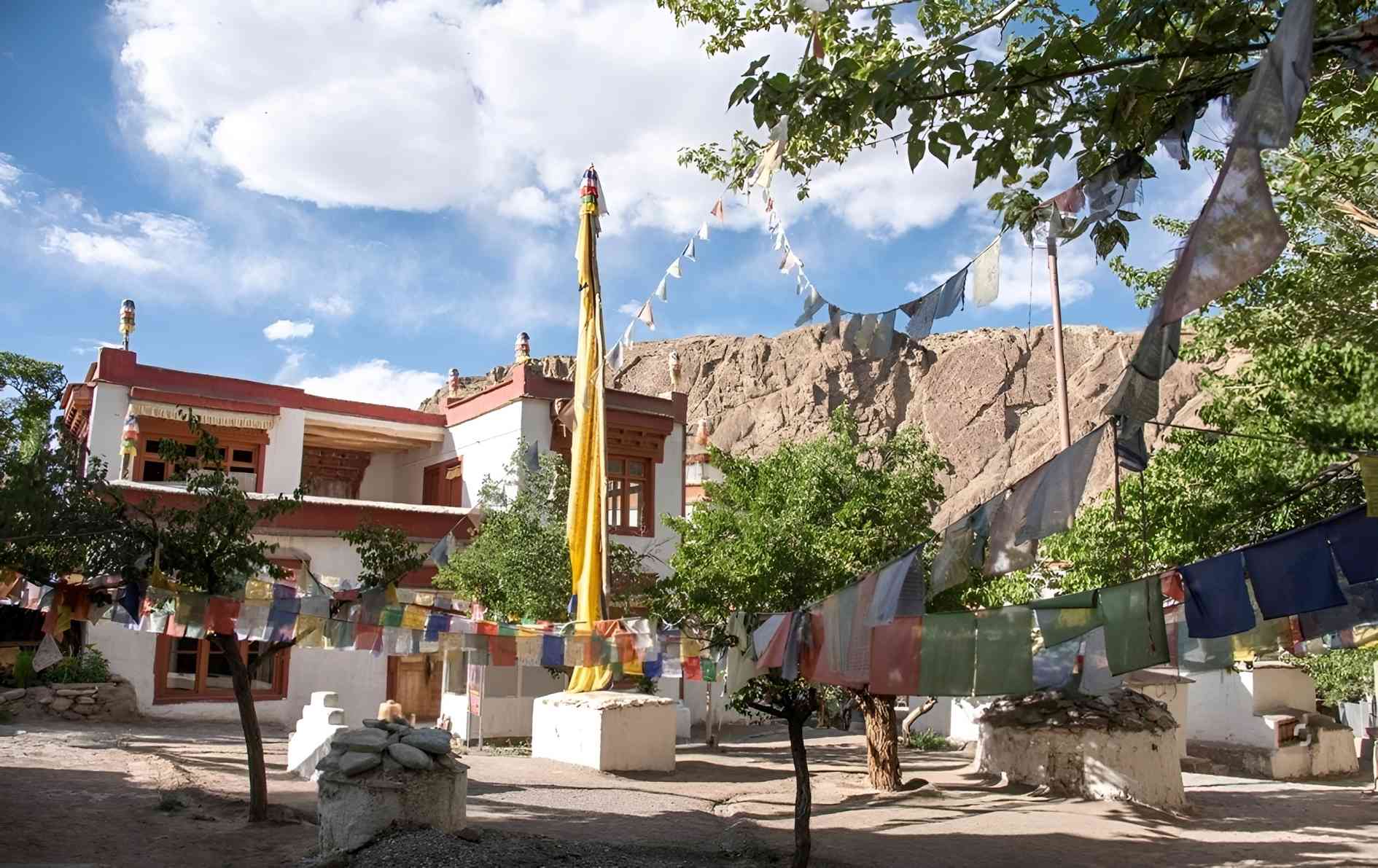
Ladakh is often described as the land of monasteries, high mountain passes, and timeless spirituality—a region where every valley echoes with prayer chants and every landscape feels deeply connected to faith and history. Among its many sacred landmarks, Alchi Monastery stands apart with a quiet authority. It is not only regarded as one of the oldest Buddhist monasteries in Ladakh but also as a rare and invaluable cultural treasure that preserves the earliest expressions of Indo-Tibetan Buddhist art, ancient wall murals, sacred iconography, and revered deities that date back nearly a thousand years. While most monasteries in Ladakh rise dramatically on hilltops, symbolizing protection and spiritual elevation, Alchi Monastery rests humbly beside the Indus River in a fertile valley, almost hidden from the outside world. This unusual setting gives it a sense of stillness and mystery, as if the monastery has deliberately protected its secrets from the passage of time, quietly witnessing centuries of spiritual practice, cultural exchange, and human devotion.
The story of Alchi is not merely about an architectural complex or a religious institution; it is a living narrative of faith, artistic brilliance, and civilizational dialogue. It reflects the journey of Buddhism as it spread across the Himalayan belt, adapting to new cultures while preserving its philosophical core. The monastery stands as a testament to the era when Ladakh became a crossroads of ideas—where Indian spirituality, Tibetan traditions, and Kashmiri artistry merged to create a unique religious and cultural identity. Every corridor, temple chamber, and mural within Alchi speaks of this transformation. The monastery represents not only devotion but also knowledge, craftsmanship, and the spiritual aspirations of generations who sought enlightenment in the harsh yet beautiful landscape of the Himalayas.
To understand the history of Alchi Monastery is to explore the deeper roots of Buddhism in Ladakh and the broader Himalayan region. It is to trace how monks, translators, and scholars carried sacred teachings across mountain passes, establishing centers of learning and meditation that would shape the spiritual fabric of Ladakhi society. It also reveals the profound influence of Tibetan culture, which helped institutionalize Buddhist practices, rituals, and monastic life in the region. At the same time, Alchi reflects the evolution of Himalayan spiritual traditions—how they adapted to geography, community life, and artistic expression while remaining rooted in compassion, wisdom, and enlightenment.
More than a historical monument, Alchi Monastery is a timeless spiritual archive. Its ancient murals preserve philosophical teachings, its sculptures embody sacred deities and cosmic symbolism, and its architecture reflects centuries of cultural continuity. The monastery tells a story of how art became a medium of meditation, how spirituality shaped everyday life, and how Ladakh emerged as one of the most important centers of Buddhist heritage in the Himalayas. Standing in its quiet courtyards, one can almost feel the presence of the past—monks in silent contemplation, artists carefully painting sacred imagery, and pilgrims arriving with hope and reverence.
In many ways, Alchi is not just a place; it is an experience of Ladakh’s soul. It captures the essence of a civilization that balanced harsh terrain with deep spirituality, isolation with cultural exchange, and simplicity with profound philosophical depth. The monastery continues to inspire travelers, historians, and spiritual seekers alike, offering a rare glimpse into a world where time moves slowly and every stone, painting, and prayer carries the weight of centuries.
Origins of Alchi Monastery: The Arrival of Buddhism in Ladakh
The history of Alchi Monastery is deeply connected with the spread of Buddhism in the Himalayan region during the 10th–11th centuries. This period marked a cultural renaissance when Buddhism was being revived across Western Tibet and Ladakh after centuries of decline. Monks, scholars, and translators traveled across mountains to re-establish monasteries, translate sacred texts, and introduce spiritual teachings.
Alchi Monastery is traditionally attributed to the great Buddhist scholar and translator Rinchen Zangpo, also known as the “Great Translator.” He is believed to have played a pivotal role in building temples and spreading Mahayana Buddhism across Ladakh and Tibet. While historians debate the extent of his direct involvement, his influence on the region’s religious architecture and philosophy is undeniable.
Unlike many monasteries that were later rebuilt or modified, Alchi preserved its early character. This is why historians and art scholars consider it the oldest surviving Buddhist heritage site in Ladakh. Its structures reflect early Himalayan Buddhist architecture influenced by Kashmiri craftsmanship, Tibetan spirituality, and Indian artistic traditions.
Alchi’s Unique Location: A Monastery Away from the Hills
One of the most distinctive features of Alchi Monastery is its location. While most Ladakh monasteries are built on hilltops for defense and visibility, Alchi is situated on flat land near the Indus River. This suggests that it may have originally functioned more as a spiritual and artistic center rather than a defensive monastic complex.
The fertile surroundings allowed monks to live a more settled life, engaging in meditation, artistic creation, and scriptural study. The monastery became a center for Buddhist learning, ritual practices, and cultural development. Pilgrims traveling through the Sham Valley would stop here to seek blessings and experience its spiritual atmosphere.
Today, Alchi Village and monastery are integral parts of Ladakh tourism, attracting travelers seeking heritage experiences, monastery tours, and cultural insights.
Architectural Heritage of Alchi Monastery
The architectural style of Alchi Monastery reflects a rare fusion of Indian, Tibetan, and Kashmiri influences. Built using mud brick, wood carvings, and stone foundations, the structures were designed to withstand harsh Himalayan weather while maintaining spiritual symbolism.
The monastery complex includes several temples, known locally as Lhakhangs. The most important among them are:
-
Dukhang (Assembly Hall)
-
Sumtseg Temple
-
Manjushri Temple
-
Lotsabha Temple
-
Vairocana Temple
Each structure represents a unique spiritual concept and artistic narrative, showcasing intricate woodwork, murals, and sculptures.
Unlike many Ladakh monasteries that focus on external grandeur, Alchi’s beauty lies inside. Its walls are covered with centuries-old paintings depicting Buddhist cosmology, mandalas, celestial beings, and sacred deities.
Murals of Alchi: A Living Canvas of Buddhist Philosophy
The murals of Alchi Monastery are among the oldest and finest examples of Indo-Tibetan Buddhist art. Created using natural pigments, these paintings depict the spiritual universe of Mahayana Buddhism.
They illustrate :
-
Buddha’s life stories
-
Bodhisattvas and protective deities
-
Mandalas representing cosmic order
-
Spiritual teachers and lineage masters
-
Celestial palaces and divine realms
These murals were not merely decorative. They served as visual scriptures, guiding monks and devotees in meditation and philosophical understanding.
The artistic style shows Kashmiri influence, particularly in facial expressions, jewelry details, and clothing patterns. This confirms historical cultural exchange between Ladakh and Kashmir during early Buddhist expansion.
Sacred Deities of Alchi Monastery
One of the most spiritually significant aspects of Alchi Monastery is its depiction of Buddhist deities. Each temple houses sculptures and paintings representing cosmic forces, compassion, wisdom, and protection.
Vairocana – The Cosmic Buddha
Vairocana, often represented in Alchi, symbolizes universal truth and enlightenment. His presence signifies the central teaching of Mahayana Buddhism—that enlightenment exists within all beings.
Avalokiteshvara – The Bodhisattva of Compassion
Avalokiteshvara is among the most revered deities in Ladakh. Known as the embodiment of compassion, he represents the ideal of helping all sentient beings achieve liberation.
Manjushri – The Bodhisattva of Wisdom
The Manjushri Temple in Alchi is dedicated to the deity of wisdom. Depicted holding a sword and scripture, Manjushri symbolizes knowledge cutting through ignorance.
Maitreya – The Future Buddha
Statues of Maitreya represent hope and the future of humanity. His presence in Alchi emphasizes continuity of spiritual evolution.
Tara – The Divine Feminine Protector
Tara, worshipped in her various forms, symbolizes compassion and protection. Her imagery highlights the feminine dimension of Buddhist spirituality.
These deities form the philosophical foundation of Alchi Monastery, guiding meditation practices, rituals, and teachings.
Sumtseg Temple: The Spiritual Heart of Alchi
The Sumtseg Temple is one of the most iconic structures within Alchi Monastery. Its three-story design symbolizes the spiritual path—ignorance, realization, and enlightenment.
Inside, towering clay sculptures and detailed murals depict the cosmic world of Buddhism. The temple is considered a masterpiece of Himalayan religious architecture.
Scholars often describe Sumtseg as a “spiritual museum,” preserving ancient artistic traditions rarely found elsewhere in Ladakh.
Role of Alchi in Ladakhi Buddhism
Alchi Monastery played a central role in shaping Ladakhi Buddhist traditions. It served as:
-
A center for monastic learning
-
A place for translation of scriptures
-
A hub for cultural exchange
-
A pilgrimage destination
Unlike monasteries that function primarily as monastic residences, Alchi became an artistic and philosophical center. Its teachings influenced later monasteries across Ladakh, including Lamayuru and Thiksey.
Cultural Exchange and Kashmiri Influence
The artistic details of Alchi Monastery reveal strong Kashmiri influence. This reflects the historical trade routes connecting Ladakh, Kashmir, and Central Asia.
Craftsmen from Kashmir are believed to have contributed to:
-
Wood carvings
-
Sculpture design
-
Mural painting styles
This cross-cultural interaction shaped Ladakh’s identity as a meeting point of civilizations.
Spiritual Practices at Alchi Monastery
Despite its age, Alchi Monastery remains a living spiritual site. Monks continue rituals, prayer ceremonies, and meditation practices.
Pilgrims visit to:
The monastery represents continuity—ancient traditions preserved in a modern world.
Alchi Monastery and Ladakh Tourism
Today, Alchi Monastery is a major attraction for travelers exploring Ladakh. It forms a key part of the Sham Valley circuit and is often included in Leh sightseeing tours.
Visitors come for:
-
Heritage tourism
-
Cultural exploration
-
Photography tours
-
Spiritual travel
Unlike crowded tourist spots, Alchi offers a peaceful experience, allowing travelers to connect with Ladakh’s spiritual roots.
Why Alchi Is Called the Oldest Buddhist Heritage of Ladakh
Alchi’s uniqueness lies in its preservation. While many monasteries were rebuilt over centuries, Alchi retains original structures, murals, and sculptures.
Its age, artistic value, and spiritual importance make it a UNESCO-recognized cultural heritage site and one of the oldest Buddhist monasteries in Ladakh.
Storytelling Through Time: The Living Legacy of Alchi
Walking through Alchi Monastery feels like stepping into a different era. The silence of its corridors, the dim light illuminating ancient murals, and the scent of incense create a spiritual atmosphere unlike any other.
Every wall tells a story—of monks who meditated here, artists who painted sacred imagery, and travelers who found peace within its halls.
Alchi is not just a monastery; it is a living narrative of Ladakh’s history, spirituality, and cultural evolution.
Preservation and Future of Alchi Monastery
Preserving Alchi Monastery is crucial for maintaining Ladakh’s heritage. Conservation efforts focus on protecting murals, structures, and sculptures from environmental damage.
Responsible tourism, heritage awareness, and community involvement are key to safeguarding this historic site for future generations.
“In the silence of Alchi Monastery, centuries of faith still breathe.”
The history of Alchi Monastery is a journey through centuries of faith, art, and human devotion. It stands as a symbol of Ladakh’s Buddhist heritage, cultural exchange, and spiritual resilience.
For travelers, historians, and seekers, Alchi offers more than sightseeing—it offers understanding. It reveals how spirituality shapes communities, how art preserves faith, and how heritage connects past and present.
In the quiet valley beside the Indus River, Alchi continues to whisper its story—of enlightenment, compassion, wisdom, and timeless Himalayan spirituality.