There's a moment, usually somewhere in mid-November, when a single maple in a Kyoto temple garden turns so red it looks lit from within. You stand under it, the light comes through the leaves, and you understand — instantly, wordlessly — why the Japanese have been writing poems about this for over a thousand years.
Autumn in Japan doesn't announce itself the way spring does. Cherry blossom season arrives in a rush and is gone in a week, all pink and frantic and crowded. Autumn is slower, moodier, more generous. It rolls down the country over nearly three months, and if you know how to chase it, you can follow the colour from the mountains of Hokkaido all the way to the temples of Kyushu. The Japanese even have a word for it — momijigari, "red-leaf hunting."
If you're planning a trip and wondering whether autumn is worth it, let me settle that now: it's the single best time to visit Japan. Fewer crowds than spring, kinder weather than summer, and scenery that turns every ordinary walk into something you'll remember for years. This is your complete guide to where to go, when to go, and how to build a trip around it.
When Is Autumn in Japan? The 2026 Fall Foliage Forecast, Region by Region
Here's the thing most first-time visitors get wrong: there is no single "autumn" in Japan. The season is a slow wave, and where you stand on that wave depends entirely on where and when you go.
Unlike the cherry blossoms — which bloom from the warm south and move north — autumn foliage does the exact opposite. The cold triggers the colour, so the change begins in the chilly peaks of northern Hokkaido around mid-September and rolls steadily southward, reaching Tokyo and Kyoto in late November and lingering into December in the mild south.
Foliage watchers call this the "koyo front," and following it is the whole art of planning an autumn trip.
Here's the rough regional timeline for 2026, which is shaping up to be a fairly typical year:
- Hokkaido (far north): mid-September to mid-October. Daisetsuzan National Park colours first, often paired with the season's first dusting of snow on the peaks — a magical combination.
- Tohoku (northern Honshu): early October to early November. Think Oirase Stream in Aomori and the onsen villages of Akita.
- The Japanese Alps & Central Japan: early October to early November. Higher elevations turn well before the cities.
- Tokyo & the Kanto region: mid to late November, often holding into early December.
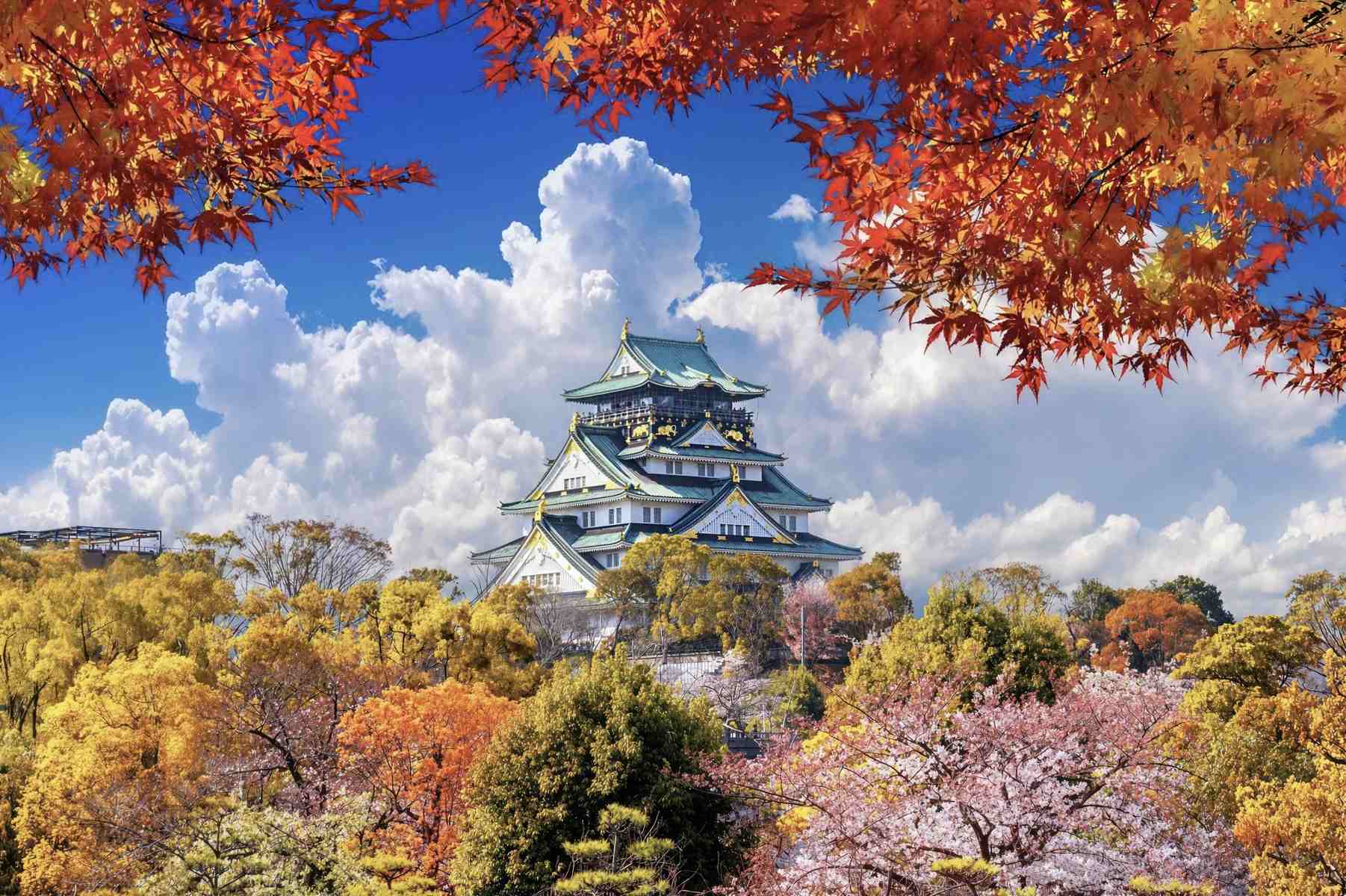
- Kyoto, Osaka & Kansai: late November to early December — the classic, most-photographed peak.
- Kyushu (far south): late November into mid-December.
Koyo vs Momiji: Understanding Japan's Autumn Leaf-Hunting Tradition
You'll see two words everywhere once you start researching a Japanese autumn — koyo and momiji — and understanding the difference will genuinely deepen the trip.
Koyo (紅葉) is the broad term: the whole phenomenon of leaves changing colour, the entire season of reds, oranges, and golds sweeping across the country. Momiji technically shares the same characters but refers specifically to the Japanese maple — the star of the show, the tree responsible for those impossibly deep crimson reds you see draped over temple ponds and mountain streams. Think of koyo as the entire performance and momiji as the lead actor.
Then there's momijigari (紅葉狩り) — literally "red-leaf hunting." It's the centuries-old tradition of travelling specifically to seek out the most beautiful autumn scenery, and it's exactly what you'll be doing. The practice dates back to the Heian period (794–1185), when aristocrats would compose poetry beneath the maples, and it appears in some of Japan's oldest classical literature. When you go leaf-hunting today, you're stepping into a ritual over a thousand years old.
It's worth knowing there are two different waves of colour to hunt, too. The red maple (momiji) gets all the attention, but the golden ginkgo (icho) is its equally stunning counterpart — and it turns a slightly different, often earlier, brilliant yellow. Tokyo's famous ginkgo-lined avenues are proof that autumn in Japan isn't only about red.
This is the kind of cultural texture that turns a sightseeing trip into a genuine experience — and honestly, it's why we always build a little local storytelling into our autumn routes. Knowing why a place matters changes how it feels to stand there.
Kyoto in Autumn: The Best Temples & Gardens for Fall Colours
If you see one place in autumn, make it Kyoto. The old capital was practically designed for this season — a thousand years of temple gardens, moss, maples, and still ponds, all engineered to frame the changing leaves. In late November and early December, the whole city glows.
Arashiyama, on the western edge, is the postcard. Beyond its famous bamboo grove, the hillsides here erupt in red and gold, best seen from the Togetsukyo Bridge over the Katsura River or from the serene gardens of Okochi Sanso villa. Go at opening time — genuinely, before 8 a.m. — to have it before the crowds.
Kifune Shrine, tucked in the northern hills, offers something different: a stone stairway lined with red lanterns and blazing maples, especially haunting when they light it up after dark. Tofuku-ji temple is arguably Kyoto's most spectacular single spot, its wooden Tsutenkyo Bridge floating over a valley of thousands of maples — so beautiful it gets genuinely crowded, so arrive early.
For something quieter, the gardens of Eikan-do and Kifune reward the patient, and many of Kyoto's temples hold special evening illuminations during peak season, where the maples are lit against the dark and reflected in still water. It's unforgettable.
A practical note: Kyoto in peak autumn is popular for a reason, and the best spots fill fast. Early mornings, weekday visits, and a smart route between temples make all the difference between a magical day and a frustrating one — the sort of thing that's far easier with a plan than without.
Tokyo's Best Autumn Spots: Ginkgo Avenues & Late-Season Foliage
Most people don't think of Tokyo as an autumn destination — and that's exactly why it's such a pleasant surprise. The capital turns colour later than almost anywhere, holding its foliage well into early December, which makes it perfect for travellers who want to dodge the November peak crowds and still catch the season.
Tokyo's signature autumn image isn't red at all — it's gold. Icho Namiki (Ginkgo Avenue) in Meiji Jingu Gaien is a breathtaking tunnel of golden ginkgo trees, their fallen leaves carpeting the path in yellow. It's one of the most photographed autumn scenes in the country and peaks in late November to early December.
For classic red maples, Rikugien Garden is the city's finest — a strolling garden that holds special evening illuminations, the maples mirrored in its central pond. Koishikawa Korakuen, one of Tokyo's oldest gardens, offers a similar serenity in the heart of the city. And just outside the centre, the temple town of Kamakura — with the maples of Meigetsuin and the hillside temples — makes a perfect autumn day trip.
Because Tokyo colours so late, it's the ideal bookend for an autumn trip: start in the northern mountains or the Alps while they're peaking in October, then work south, and finish in Tokyo just as its ginkgoes turn gold in December. That single move lets you follow the colour across nearly the entire country.
Beyond the Cities: Hakone, Nikko & the Japanese Alps in Autumn
Here's where the good autumn trips separate from the ordinary ones. Kyoto and Tokyo are magnificent, but the most breathtaking fall scenery in Japan lives in the mountains — and far fewer travellers make the effort to get there.
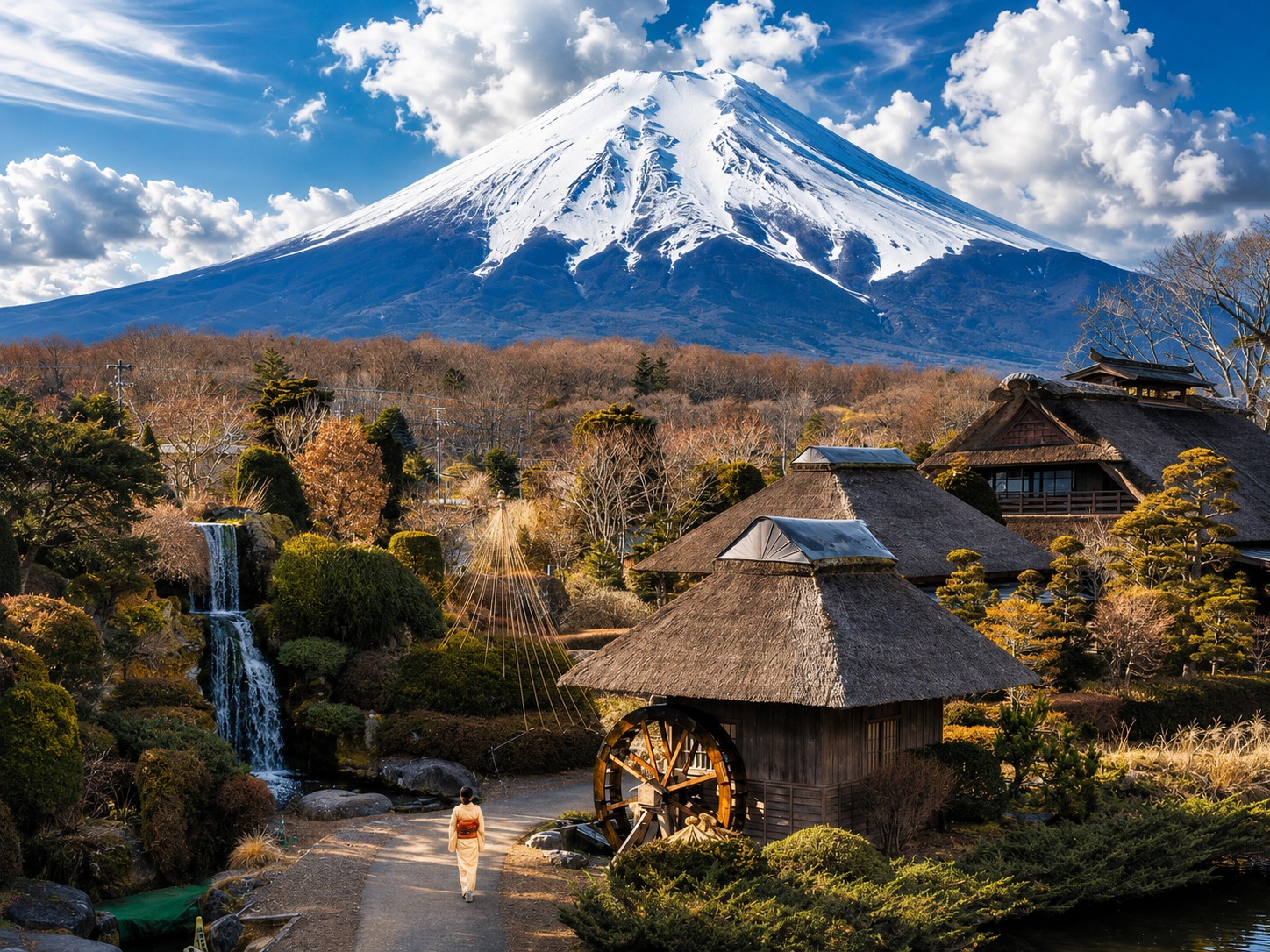
Hakone is the easiest of these escapes and one of the best. Set among volcanic hills southwest of Tokyo, it wraps autumn colour around views of Mount Fuji, hot spring baths, and a lake you can cross on a (slightly theatrical) pirate ship. Picture this: soaking in an open-air onsen, steam rising, as red maples frame a snow-capped Fuji in the distance. That's peak Hakone in November, and it's the kind of scene that sells a whole trip.
Nikko, a couple of hours north of Tokyo, pairs UNESCO-listed shrines with genuinely dramatic mountain foliage. The area around Ryuzu Falls and Lake Chuzenji turns spectacularly early — mid to late October — as the higher elevation catches the cold first. It's one of the best places in the country to see autumn before the cities have even begun.
And then the Japanese Alps: the old merchant town of Takayama, the fairytale thatched village of Shirakawa-go, and the dramatic Kamikochi valley, where golden larches and red maples line rivers running beneath jagged peaks. This is autumn at its most cinematic, and it peaks in October — well before Kyoto — which is exactly why building a north-to-south route matters so much.
This offbeat mountain layer is the heart of how we design autumn trips. Anyone can point you to Kyoto. The real skill is knowing that Kamikochi peaks weeks earlier, that Hakone needs a clear morning for Fuji, and how to string these places into a single trip that follows the colour instead of fighting it.
How to Plan Your Autumn Japan Trip: Timing, Routes & Tour Packages
So how do you actually turn all of this into a trip? After years of building autumn itineraries, here's the honest framework.
Start with your dates, then pick your region — not the other way round. If you can only travel in October, base your trip around Hokkaido, Tohoku, Nikko, and the Alps, where the colour peaks early. If you're travelling in late November or early December, Kyoto, Tokyo, Hakone, and the south are your sweet spot. Trying to see Kyoto's maples in early October or Hokkaido's in December simply won't work — the wave will have passed or not yet arrived.
Build a route that follows the koyo front. The smartest autumn trips move with the colour: begin in the higher, cooler north or the Alps while they're peaking, then travel south and downhill as the season progresses, finishing in the late-turning cities. Done well, a single well-timed trip can chase peak foliage across the entire country.
Leave room for the forecast to shift. Because peak colour can move by a week in either direction, a little flexibility — or an itinerary with backup spots at different elevations — protects you from arriving to bare branches or unturned green.
Book accommodation early. Autumn is one of Japan's busiest travel seasons. The best ryokans in Hakone and Kyoto's most atmospheric stays sell out months ahead for peak weekends.
This is genuinely where a well-designed Japan tour package earns its keep. The difference between a trip that catches peak colour everywhere and one that misses it comes down to timing, elevation, and route logistics — the exact things that are hard to judge from abroad and easy to get wrong. A package built by people who track the koyo front every year takes that gamble off the table.
Chase the Colour With Us
Autumn is, quite simply, the most rewarding time to experience Japan — and the most rewarding to get right. The colours are fleeting, the timing is delicate, and the best of it lives just off the well-worn path. That's exactly the kind of trip we love to build: routes that follow the season across the country, blend Kyoto's temple gardens with the quiet drama of the Alps, and land you under the right maple at the right moment.
If you'd like an autumn Japan tour package shaped around the 2026 foliage season — timed to the koyo front, offbeat where it counts, and completely sorted on the logistics — get in touch and let's plan your leaf-hunting trip. The maples are waiting.
"In autumn, Japan doesn't just change colour — it remembers how to be quiet, and invites you to remember with it."
Autumn in Japan is fleeting — and timing is everything. Let us build you a Japan tour package that follows the colour across the country, so you're standing under the right maple at exactly the right moment. Get in touch and let's plan your 2026 leaf-hunting trip.
You May Also Connect With Us On →
Website: BreakBag Holidays |
Email: support@breakbag.com |
Facebook: BreakBag Holidays |
Instagram: @breakbagholidays |
YouTube: BreakBag Holidays |
Threads: @breakbagholidays |
LinkedIn: BreakBag Holidays |