


Angami Tribe of Nagaland: Culture, Khonoma Village & the Hornbill Connection
By the BreakBag Travel TeamThere's a moment, somewhere on the winding road out of Dimapur, when the plains give up and the hills take over. The air thins and cools. The noise falls away. And by the time you reach Kigwema, a village perched in the folds of the Naga hills, you understand that you haven't just changed locations — you've stepped into the homeland of one of India's most fascinating communities: the Angami tribe of Nagaland.
This is a story about them. About their stone-paved villages, their terraced fields that climb the mountains like green staircases, their fierce history and their gentler present. And it's a story about how, if you time it right, you can witness all of it come alive during the Hornbill Festival — the great gathering of the Naga tribes.
Looking to experience the real tribal culture of Nagaland? Explore our Hornbill Festival 2026 tour packages, featuring immersive travel, authentic village stays, and meaningful tribal interactions—while joining like-minded travellers on our fixed group departures led by expert trip leaders.
Who Are the Angami Tribe of Nagaland?
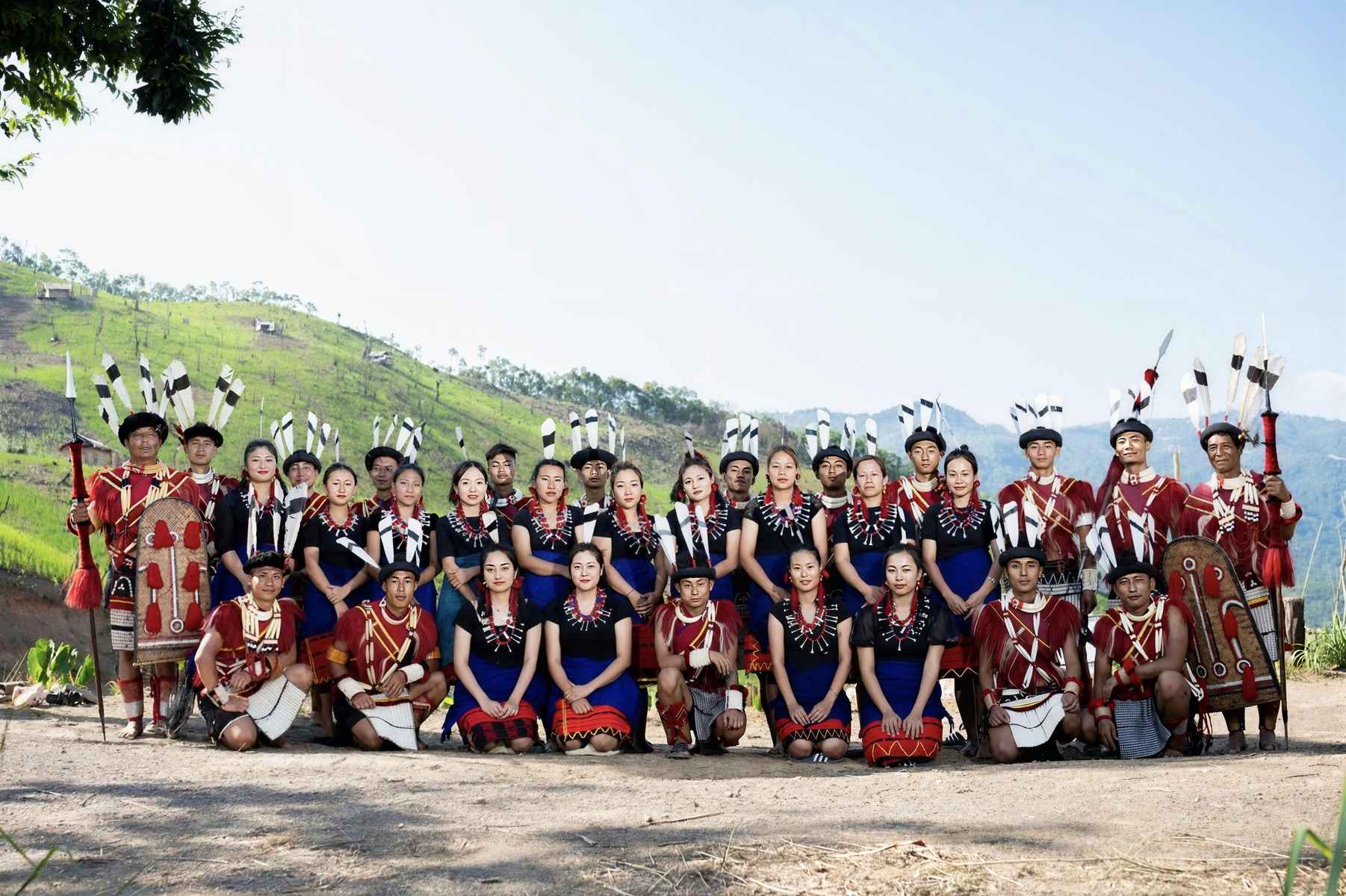
The Angami are among the largest and best-known of the Naga tribes, living mainly in and around Kohima, the state capital. If you've seen a photograph of Nagaland — a warrior in a red-and-black shawl, a village wrapped in morning mist, a hillside carved into terraces — chances are you were looking at Angami country.
They are farmers by heart and history. Unlike many hill communities who practice shifting cultivation, the Angami are known for their remarkable terraced wet-rice fields, engineered into steep slopes with a precision that has drawn admiration for generations. To walk through an Angami village is to see a people who shaped the mountain to their will, patiently, over centuries.
But the Angami are also known for something else: a proud martial past. This was once headhunting territory, where courage defined a man's standing and the village was both home and fortress. That history hasn't vanished — it lives on in the shawls they wear, the songs they sing, and the stone monoliths that still stand at village entrances, each one a memory carved in rock.
Often referred to as the ‘Festival of Festivals,’ Hornbill brings together diverse tribal communities on a single platform, making it one of India’s most significant cultural gatherings.
Kigwema: Where Your Angami Story Begins
Your journey opens in Kigwema village, and there's no better doorway into Angami life.
On your first day, the scenic transfer from Dimapur delivers you to a traditional Kigwema homestay — and this is the detail that matters. You're not checking into a hotel. You're staying in an Angami home, in an Angami village, waking to the sounds of a community that has lived on this land for centuries. Kigwema sits just a short distance from the Hornbill Festival grounds at Kisama, which makes it the perfect base — close enough to the celebration, far enough to feel the real rhythm of village life.
Spend your first evening simply arriving. Let the cold mountain air settle over you. Somewhere nearby, a kitchen fire is warming a pot of smoked pork and bamboo shoot, and the day is winding down the way it has in Kigwema for generations.
Khonoma: The Green Village of the Angami
If there's one place that captures the soul of the Angami, it's Khonoma — and on Day 3, you'll drive out to see it.
Khonoma is famous for two things. First, it is celebrated as Asia's first "green village," a community that banned hunting and logging across its forests and chose to protect the Blyth's tragopan and the wild slopes it lives on. It's conservation not as policy, but as identity — the Angami relationship with their land, made visible.
Second, Khonoma is a place of legend. This was the site of fierce Angami resistance against British forces in the 19th century, and the village still carries that memory in its fortress-like layout and stone gates. To wander its terraced fields and stone pathways is to walk through a living chapter of Naga history.
The same day brings you to the Kohima War Cemetery, a quiet, beautifully kept memorial to the soldiers who fell in the Battle of Kohima during the Second World War — the battle often called the "Stalingrad of the East." Standing among the neat rows of graves, with the town spread out below, is a moving counterpoint to the celebrations you'll return to that evening at the festival ground.
Dzulikie and the Wider Angami Country
On Day 4, the road leads to Dzulikie village — a scenic, high-altitude corner of the Naga hills where mountain streams run cold and clear and the landscape opens into some of the most peaceful views of the trip. This is the quieter face of Angami country: fewer crowds, more sky, and the kind of stillness that stays with you long after you leave.
By evening, you're back at the Hornbill Festival grounds, and this is where the two halves of the journey — the villages and the festival — finally come together.
The Hornbill Connection: Where Angami Culture Comes Alive
Here's why the timing of this trip is everything.
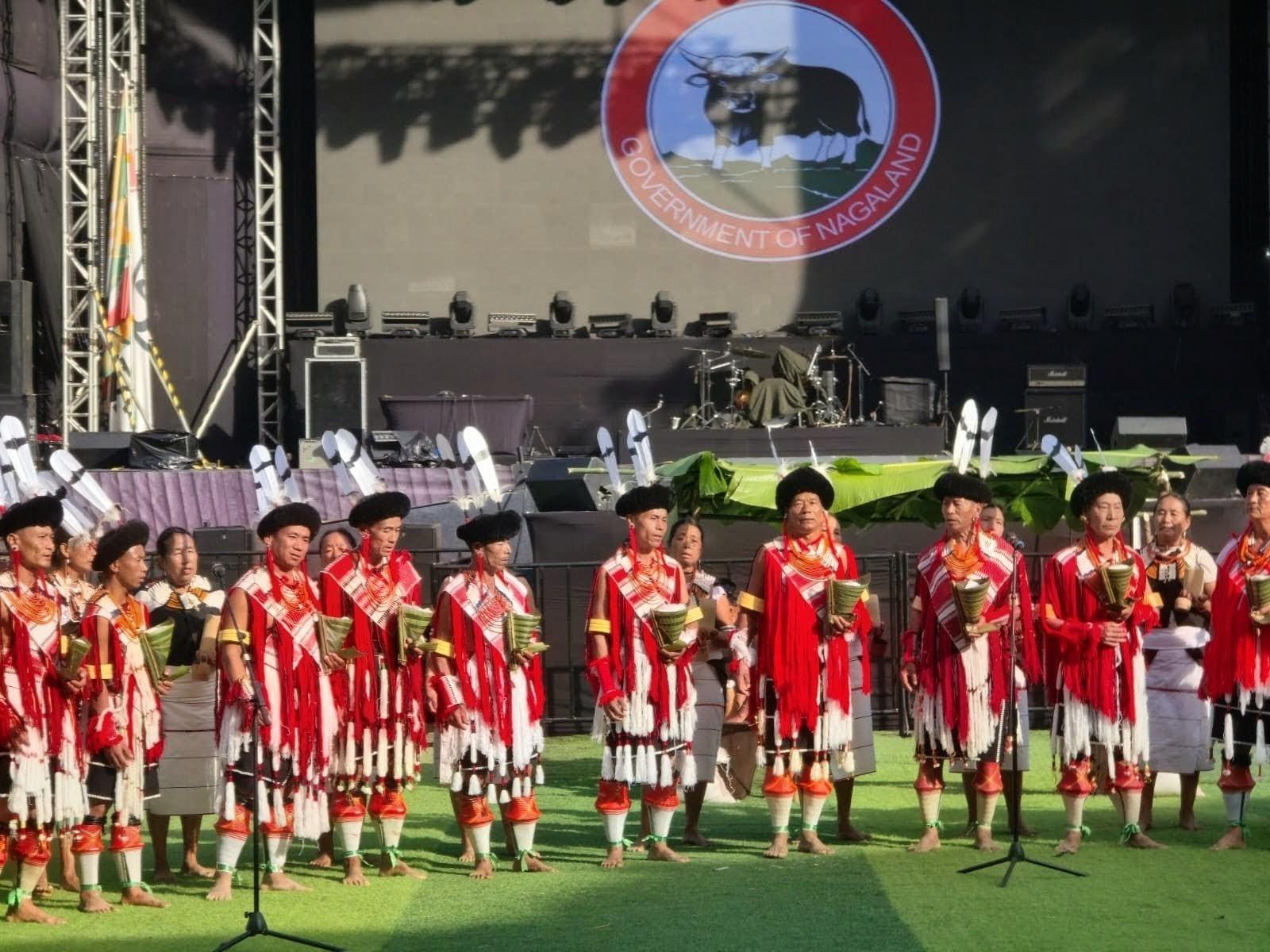
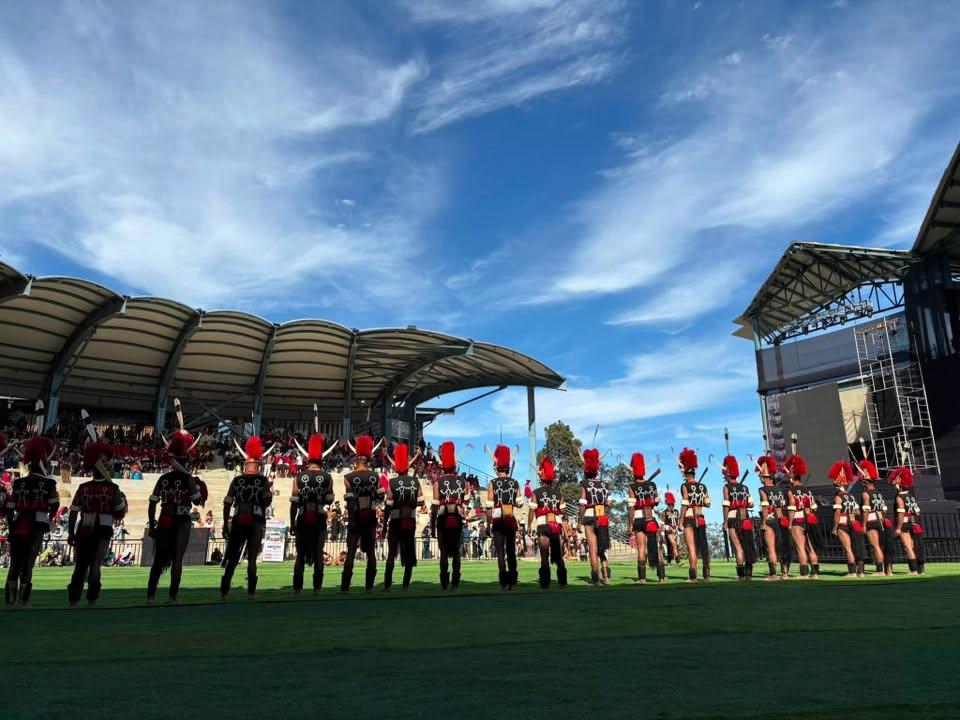
The Hornbill Festival, held every December at the Naga Heritage Village in Kisama, is often called the "Festival of Festivals." It's where all the major Naga tribes gather to share their dances, songs, food, crafts, and traditions — a single stage for a whole state's worth of culture. And because Kisama sits in the Angami heartland, you're experiencing it from the inside, not as a distant spectator.
Over your days here — the opening ceremony on Day 2, the evening showcases that follow — you'll watch tribal dances stamped out to the beat of log drums, hear folk music that predates any written record, and see the Angami and their neighbours in full ceremonial dress: the shawls, the headgear, the spears and ornaments that turn a festival ground into a moving museum of Naga identity.
What makes it unforgettable is the context. You've slept in an Angami village. You've walked Khonoma's green terraces. You've stood in the war cemetery and driven through Dzulikie's hills. So when the dancers take the ground at Hornbill, you're not just watching a performance — you're recognising a culture you've spent days living alongside.
The Hornbill festival promotes sustainable tourism by encouraging community participation and preserving traditional knowledge systems.
Planning Your Angami & Hornbill Journey
The best time to experience the Angami tribe of Nagaland alongside the Hornbill Festival is early December, when the festival takes place and the hills are at their crisp, golden best. Here's the shape of the journey:
- Day 1 — Arrive at Dimapur, scenic transfer to your Kigwema village homestay
- Day 2 — Kigwema village excursion and the Hornbill Festival opening ceremony
- Day 3 — Khonoma green village, Kohima War Cemetery, and an evening at the festival ground
- Day 4 — Dzulikie village excursion and an evening Hornbill Festival experience
- Day 5 — Departure, with a final scenic transfer to Dimapur Airport
Five days. One tribe's homeland. And a festival that pulls all of Nagaland's stories into one place.
Planning your trip properly is essential—read our complete Nagaland travel guide for Hornbill Festival 2026 covering permits, routes, and insider tips.
A Culture Worth Travelling For
The Angami tribe of Nagaland won't reveal themselves in a guidebook paragraph. They reveal themselves slowly — in a homestay dinner in Kigwema, in the stone gates of Khonoma, in the hush of the war cemetery, in the thunder of a dance at Hornbill. This is travel that asks you to slow down and pay attention, and rewards you when you do.
Come for the festival. Stay for the people. And leave understanding why the Angami, and their green hills, hold such a firm place in the story of Nagaland.
Experience the Angami Tribe with BreakBag Holidays
The Angami tribe of Nagaland won't reveal themselves in a guidebook paragraph. They reveal themselves slowly — in a homestay dinner in Kigwema, in the stone gates of Khonoma, in the hush of the Kohima War Cemetery, in the thunder of a dance at the Hornbill Festival. This is travel that asks you to slow down and pay attention, and rewards you when you do.
That's exactly the kind of journey BreakBag Holidays is built to create. Our Hornbill Festival tour doesn't just drop you at the festival gates — it roots you in Angami country. You'll stay in a traditional Kigwema village homestay, walk the green terraces of Khonoma, stand quietly at the war cemetery, drive through the mountain calm of Dzulikie, and witness the opening ceremony and evening showcases of the Hornbill Festival from the inside. Every transfer, every stay, every experience is handled, so all you have to do is show up and let Nagaland unfold.
Come for the festival. Stay for the people. And let BreakBag Holidays turn five days in the Naga hills into a story you'll carry for a lifetime.
"In Nagaland, you don't just watch a culture — you're welcomed into it. The Angami don't perform their heritage; they live it, and for a few days, so will you."
You May Also Connect With Us On →
Whatsaap: BreakBag’s Whatsaap |
Website: BreakBag Holidays |
Email: support@breakbag.com |
Facebook: BreakBag Holidays Facebook |
Instagram: @breakbagholidays |
YouTube: BreakBag Holidays YouTube |
Threads: @breakbagholidays on Threads |
LinkedIn: BreakBag Holidays LinkedIn |
Similar Destination

Hornbill Festival Tour Package 2026 with Dzukou Valley Trek
3N Kigwema · 1N Dzukou Valley · 1N Kigwema
Looking for a hassle free trip?
Connect with our experts! Get the best Itineraries and Offers!