


Tibet Travel Guide 2025: Discovering the Roof of the World
There are destinations that thrill you. There are destinations that calm you. And then there is Tibet—a place that does both, while also teaching you how to breathe again. Often called “The Roof of the World”, Tibet is a land of sky-touching mountains, ancient monasteries echoing with chants, turquoise lakes shimmering under bright Himalayan sunshine, and deeply spiritual communities living in harmony with nature. For Indian travellers searching for offbeat Himalayan adventures, sacred spiritual experiences, high-altitude expeditions, and slow, meaningful journeys, no place on Earth compares to Tibet.
In 2025, BreakBag Holidays proudly brings you the most immersive and sustainable way to explore Tibet through Tibet Tour Packages, Tibet Group Tours, Lhasa Tour Packages, and Tibet Homestay Travel, crafted with local partnerships, decades of Himalayan expertise, and a commitment to responsible tourism.
Welcome to the Complete Tibet Travel Guide 2025, your all-inclusive handbook to understanding, exploring, and experiencing one of Earth’s most powerful and peaceful destinations.
Why Tibet Deserves to Be on Your 2025 Travel Bucket List
If you have already travelled through iconic Himalayan regions like Ladakh, Spiti Valley, Arunachal Pradesh, Bhutan, or Nepal, you might feel you have witnessed the Himalayas at their most raw and spiritual. Snow-clad mountains, prayer flags fluttering in the wind, remote monasteries, and winding mountain roads may already feel familiar. Yet, Tibet stands apart—not as a continuation of the Himalayan experience, but as its highest, deepest, and most profound expression.
Tibet is not merely another mountain destination. It is an entirely different world—one where the land feels closer to the sky, where silence speaks louder than sound, and where spirituality is not practiced occasionally but lived every single day.
Often referred to as “The Roof of the World”, Tibet sits on the highest plateau on Earth, with landscapes so vast and untouched that they challenge the very idea of scale. Here, the Himalayas stretch endlessly, lakes glow in shades of turquoise that feel almost unreal, and monasteries stand as timeless guardians of wisdom that predates modern civilization itself.
In Tibet, nature does not feel curated or commercial. There are no crowded viewpoints, no artificial attractions, and no rush to “see everything.” Instead, you are surrounded by:
-
Snow peaks that seem bigger than imagination, rising sharply from open plains
-
Endless high-altitude grasslands dotted with yaks and nomadic settlements
-
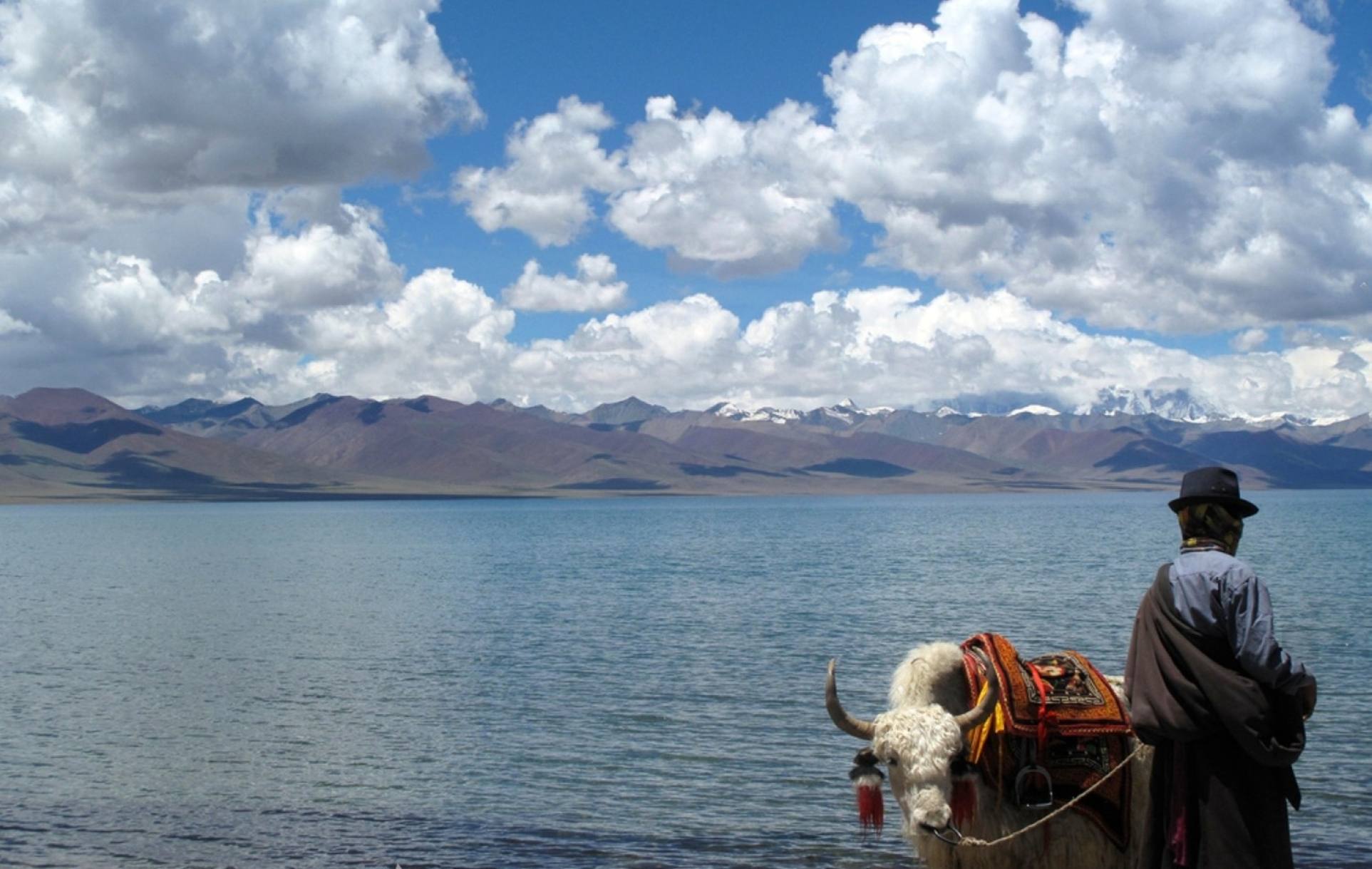
Sacred lakes like Yamdrok and Namtso, whose colors change with the sky
-
Roads that disappear into the horizon, making every drive feel like a meditation
For travellers seeking authentic, offbeat destinations, Tibet offers something increasingly rare in today’s world—space. Space to breathe, space to reflect, and space to truly connect with nature without distraction.
Where Exactly Is Tibet? A Land Between Heaven & Earth
To truly understand Tibet, one must first understand where Tibet is placed on the map of the world—and why its location alone makes it one of the most extraordinary travel destinations on Earth.
Tibet is not just geographically high; it is symbolically elevated—in culture, spirituality, and natural grandeur. Located on the Tibetan Plateau, the highest and largest plateau in the world, Tibet is often referred to as “The Roof of the World”, a title it earns both scientifically and spiritually.
Geographical Location of Tibet
Tibet lies in Central Asia, forming a natural bridge between the Indian subcontinent and mainland China. It is surrounded by some of the most important mountain systems and cultural regions in the world.
Tibet shares its borders with:
-
India – touching multiple Himalayan regions such as Ladakh, Himachal Pradesh, Uttarakhand, Sikkim, and Arunachal Pradesh
-
Nepal – connected via the famous Friendship Highway and Kathmandu–Lhasa route
-
Bhutan – sharing cultural and spiritual similarities rooted in Buddhism
-
China – bordered by provinces like Sichuan, Qinghai, Yunnan, and Xinjiang
This unique positioning makes Tibet a cultural crossroads of Asia, deeply influenced by Indian Buddhism, Himalayan traditions, and Central Asian trade routes. For Indian travellers, Tibet holds a special significance—not just as a travel destination, but as a land closely tied to India’s spiritual and historical roots.
How to Reach Tibet from India in 2025 – Complete Travel Guide
Reaching Tibet from India in 2025 is absolutely possible, provided you follow the correct routes and travel under authorised tour arrangements. Contrary to popular belief, travelling to Tibet is not complicated—it simply requires proper permits, structured itineraries, and experienced operators like BreakBag Holidays.
For Indian travellers planning a Trip to Tibet from India, there are two officially approved and widely used routes. BreakBag Holidays manages both options seamlessly, ensuring a smooth, stress-free journey from India to the Roof of the World.
Most Popular Route: India → Kathmandu → Lhasa
This is the most preferred and fastest route for Indian travellers booking Tibet Tour Packages from India.
The journey typically follows this path:
-
Fly from major Indian cities such as Delhi, Kolkata, Mumbai, Bangalore, or Chennai to Kathmandu, Nepal
-
Stay in Kathmandu while BreakBag Holidays completes your Tibet Group Tourist Visa formalities
-
Board a direct international flight from Kathmandu to Lhasa Gonggar Airport
This route is popular because:
-
Kathmandu has strong flight connectivity with India
-
Visa processing is quicker and more efficient
-
It allows smoother acclimatization before entering Tibet
-
It is ideal for Lhasa tour packages, Everest Base Camp Tibet tours, and Kailash Mansarovar Yatra
For first-time travellers, this route offers the most comfortable introduction to Tibet travel.
Tibet Permits & Visa Requirements – What Every Traveller Must Know
Travelling to Tibet is strictly regulated, and an Indian passport alone is not sufficient to enter the region. Every traveller must obtain multiple permits, all of which are mandatory and non-negotiable.
This is where professional operators like BreakBag Holidays become essential.
Mandatory Permits for Tibet Travel
BreakBag Holidays arranges all required permits, including:
-
Tibet Travel Permit (TTP) – Required to enter Tibet
-
Group Tourist Visa – Mandatory for all Indian travellers
-
Alien Travel Permit (ATP) – Needed for regions outside Lhasa
-
Restricted Area Permit – For sensitive border areas
-
Military Permit – Required for Mount Kailash and remote western regions
Without these permits, entry into Tibet is impossible, regardless of nationality. BreakBag’s dedicated operations teams based in Kathmandu and Lhasa ensure all permits are processed well in advance, allowing travellers to focus purely on the experience.
Best Time to Visit Tibet – Month-by-Month Travel Guide
Choosing the best time to visit Tibet plays a major role in shaping your overall travel experience. Due to its high altitude and unique climate, Tibet offers distinct seasonal experiences, each appealing to different types of travellers.
April to June – Peak Himalayan Beauty
This period marks the beginning of Tibet’s tourist season.
-
Pleasant temperatures
-
Clear blue skies
-
Thawing lakes like Yamdrok and Namtso
-
Ideal for Lhasa sightseeing tours, Tibet cultural tours, and photography
July to September – Summer & Scenic Road Trips
Despite occasional rainfall, this is one of the most scenic periods.
-
Warmer daytime temperatures
-
Green grasslands
-
Excellent road visibility
-
Best season for Everest Base Camp Tibet tours
October to November – Golden Autumn
One of the most visually stunning seasons.
-
Crisp air
-
Snow peaks fully visible
-
Ideal for Namtso Lake tours and monastery visits
-
Perfect for photographers and slow travellers
December to March – Winter Wonderland
Winter brings a completely different charm.
-
Frozen lakes
-
Minimal tourist crowds
-
Deeply peaceful monasteries
-
Ideal for offbeat travellers and spiritual seekers
Each season offers a unique perspective, and BreakBag designs season-specific Tibet itineraries to match weather and traveller comfort.
Top Places to Visit in Tibet – Must-See Attractions
Tibet is vast, diverse, and layered with history. A well-planned Tibet travel itinerary ensures you experience both iconic landmarks and lesser-known wonders.
Lhasa – The Spiritual Heart of Tibet
Lhasa is the starting point for most Tibet tour packages. It blends ancient spirituality with everyday Tibetan life.
Key attractions include:
-
Potala Palace
-
Jokhang Temple
-
Barkhor Street
-
Sera and Drepung Monasteries
Lhasa is where most travellers begin their spiritual and cultural journey through Tibet.
Potala Palace – Symbol of Tibetan Identity
Perched on Red Hill, Potala Palace dominates Lhasa’s skyline.
-
Former residence of the Dalai Lama
-
Over 1,000 rooms
-
Sacred murals and prayer halls
-
UNESCO World Heritage Site
It is the most iconic landmark in Tibet.
Yamdrok Lake – Sacred Turquoise Beauty
One of Tibet’s three holiest lakes, Yamdrok is famous for its unreal colours.
-
Changes shades with sunlight
-
Surrounded by snow peaks
-
A highlight of every Tibet road trip itinerary
Namtso Lake – The Heavenly Lake
Located at an altitude of 4,718 meters, Namtso Lake is one of the highest lakes in the world.
-
Sacred pilgrimage site
-
Ideal for photography
-
Popular among offbeat Tibet travellers
Shigatse – Gateway to Everest
Shigatse is the second-largest city in Tibet and a key stop on the way to Everest Base Camp.
-
Tashilhunpo Monastery
-
Traditional Tibetan markets
-
Rich religious heritage
Everest Base Camp (North Face)
The Tibetan side of Everest offers:
-
Closest road access to Everest
-
Clear, unobstructed views
-
Fewer crowds compared to Nepal side
A dream destination for photographers and adventure lovers.
Mount Kailash & Lake Mansarovar
One of the most sacred pilgrimage destinations in the world.
-
Holy to Hindus, Buddhists, Jains, and Bon followers
-
Life-changing spiritual experience
-
Carefully curated Kailash Mansarovar Yatra packages by BreakBag
Tibetan Food Guide – What to Eat in Tibet
Tibetan cuisine is simple, nourishing, and perfectly suited to high-altitude living.
Must-try dishes include:
-
Thukpa and Thenthuk (noodle soups)
-
Momos (vegetarian and meat options)
-
Sha Phaley (fried bread with fillings)
-
Butter tea (Po Cha)
-
Tsampa (barley flour staple)
Vegetarian food is widely available, and BreakBag ensures meal preferences are addressed in advance.
Where to Stay in Tibet – Hotels, Homestays & Lodges
BreakBag Holidays offers carefully selected accommodation options:
-
Budget hotels in Lhasa and Shigatse
-
Comfortable 3-star stays
-
Luxury hotels like St. Regis Lhasa
-
Tibetan homestays for cultural immersion
-
Boutique lodges along scenic routes
All stays prioritize comfort, safety, hygiene, and location.
Transportation Within Tibet
Due to regulations, all travel within Tibet must be guided.
BreakBag provides:
-
Private SUVs
-
4×4 vehicles for remote regions
-
Tourist coaches for group tours
-
Licensed English-speaking Tibetan guides
Independent travel is not permitted, ensuring safety and preservation of local culture.
What to Pack for Tibet in 2025
Packing wisely is essential due to Tibet’s climate and altitude.
Key essentials include:
-
Thermal wear and down jackets
-
Windproof outer layers
-
Woollen accessories
-
Sunscreen and sunglasses
-
Personal medicines and altitude support
BreakBag provides a detailed pre-departure packing checklist for every traveller.
Name of the Packages |
Price Breakdown |
| Budget Tibet tour packages | ₹85,000 – ₹1,10,000 |
| Standard group tours | ₹1,10,000 – ₹1,60,000 |
| Luxury Tibet tours | ₹1,60,000 – ₹2,50,000 |
| Kailash Mansarovar Yatra | ₹2,00,000 – ₹2,80,000 |
“Some journeys change your location. Tibet changes your perspective.”
Plan Your Tibet Journey with BreakBag Holidays”
Discover the Roof of the World with expertly curated Tibet Tour Packages from India.
From Lhasa sightseeing to Everest Base Camp and Kailash Mansarovar Yatra, our team handles permits, visas, stays, and experiences—so you travel worry-free.
You May Also Connect With Us On → ( pls include this part after the CTA Button )
Website: BreakBag Holidays |
Email: support@breakbag.com |
Facebook: BreakBag Holidays |
Instagram: @breakbagholidays |
YouTube: BreakBag Holidays |
Threads: @breakbagholidays |
LinkedIn: BreakBag Holidays |
Looking for a hassle free trip?
Connect with our experts! Get the best Itineraries and Offers!